


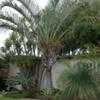
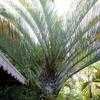
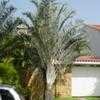
The Triangle Palm is a architectural marvel of the palm world, named for its unique three-ranked leaf arrangement that creates a distinct triangular cross-section. Native to a small region of southeastern Madagascar, Dypsis decaryi is critically endangered in the wild but widely cultivated for its striking geometric form.
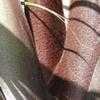
The leaves emerge in three distinct vertical rows (ranks) around the trunk, forming a perfect triangle when viewed from above. The pinnate fronds are 8-10 feet long, arching gracefully, with a keeled rachis that reinforces the triangular geometry. The trunk is solitary, gray, ringed with leaf scars, and reaches 20-30 feet tall. The crown shaft (the smooth, green section below the crown) is prominent and adds to the sculptural quality.
| Family: | Arecaceae (ar-ek-AY-see-ee) |
| Genus: | Dypsis (DIP-sis) |
| Species: | decaryi (de-KAR-yee) |
| Synonym: | Neodypsis decaryi |
Triangle Palm thrives in full sun to light shade with well-drained soil and regular moisture. It's moderately drought-tolerant once established but looks best with consistent water. It's not cold-hardy (damage below 30°F), limiting outdoor cultivation to zones 10b+. In cooler regions, it's a stunning container specimen for patios and conservatories.
Its wild population is restricted to a single valley in Madagascar, threatened by habitat loss and seed collection. Cultivated plants help reduce pressure on wild populations. The palm's unique form makes it a prized specimen in tropical and subtropical landscapes, where it serves as a living sculpture. Plant as a focal point where its geometry can be appreciated from multiple angles.
Cretan Date Palm (Phoenix theophrasti): Europe's Only Native Palm
Carpoxylon Palm (Carpoxylon macrospermum): The Rare Giant of Aneityum
African Oil Palm (Elaeis guineensis): The World's Most Productive Oil Crop
Madagascar Palm (Pachypodium lamerei): Spiny Succulent Tree
Majesty Palm (Ravenea rivularis): Elegant Feather Palm for Interiors
Foxtail Palm (Wodyetia bifurcata): The Plumose Palm for Tropical Elegance
Kentia Palm (Howea forsteriana)
Blue Mediterranean Fan Palm (Chamaerops humilis var. argentea): Silver Foliage Accent
Brazoria Palmetto (Sabal × brazoriensis): The Rare Texas Hybrid Palm
Bottle Palm (Hyophorbe lagenicaulis): The Unique, Bottle-Shaped Trunk Palm
Radicalis Palm (Chamaedorea radicalis)
Joey Palm (Johannesteijsmannia altifrons): Giant Diamond Leaves
Solitaire Palm (Ptychosperma elegans): Elegant Clumping Palm
Copyright © www.100flowers.win Botanic Garden All Rights Reserved