


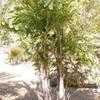
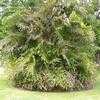
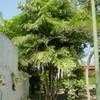
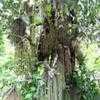
The Fishtail Palm, also called Clustered Fishtail Palm, is instantly recognizable by its distinctive bipinnate leaves—each leaflet shaped like a fish's tail fin. Native to Southeast Asia, Caryota mitis is a clustering palm that forms dense, multi-stemmed thickets, bringing bold tropical texture to landscapes and interiors.
The leaves can reach 10-20 feet long, with triangular, jagged leaflets that truly resemble fishtails. This bipinnate arrangement (leaflets divided twice) is unique among commonly cultivated palms. The stems are slender, ringed with leaf scars, and grow 15-25 feet tall in cultivation. As a clustering palm, it produces multiple stems from the base, creating a full, shrubby appearance.
| Family: | Arecaceae (ar-ek-AY-see-ee) |
| Genus: | Caryota (kair-ee-OH-tuh) |
| Species: | mitis (MIT-iss) |
Fishtail Palm is monocarpic—each individual stem flowers once, produces fruit, then dies. However, the clump continues via new shoots from the base. The cream-colored flowers appear in long, hanging inflorescences, followed by round, reddish fruits containing oxalate crystals that can irritate skin. Handle fruits with gloves.
It prefers partial shade to full sun (with adequate moisture), rich, well-drained soil, and high humidity. It's not cold-hardy (damage below 32°F), making it a container or indoor plant in most regions. Indoors, provide bright light, consistent moisture, and humidity. It's relatively fast-growing and makes a dramatic statement in atriums, lobbies, and tropical gardens. Other Caryota species like C. urens (Toddy Palm) are larger and solitary.
Buccaneer Palm (Pseudophoenix sargentii): Endangered Florida Palm
Cretan Date Palm (Phoenix theophrasti): Europe's Only Native Palm
Carpoxylon Palm (Carpoxylon macrospermum): The Rare Giant of Aneityum
African Oil Palm (Elaeis guineensis): The World's Most Productive Oil Crop
Bottle Palm (Hyophorbe lagenicaulis): The Unique, Bottle-Shaped Trunk Palm
Joey Palm (Johannesteijsmannia altifrons): Giant Diamond Leaves
Solitaire Palm (Ptychosperma elegans): Elegant Clumping Palm
Chitalpa (× Chitalpa tashkentensis)
Kentia Palm (Howea forsteriana)
Brazoria Palmetto (Sabal × brazoriensis): The Rare Texas Hybrid Palm
Cardboard Palm (Zamia furfuracea): Stiff, Textured Cycad for Containers
Bismarck Palm (Bismarckia nobilis): Silver-Blue Fan Palm for Grand Landscapes
Parlor Palm (Chamaedorea elegans): The Classic Victorian Houseplant
Copyright © www.100flowers.win Botanic Garden All Rights Reserved