


Yaupon Holly stands out as North America's only native caffeinated plant, offering both ornamental beauty and fascinating cultural history. This versatile evergreen shrub or small tree (Ilex vomitoria) thrives across the southeastern United States, from coastal dunes to inland forests, proving remarkably adaptable to diverse growing conditions.
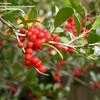
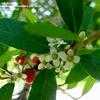
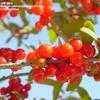
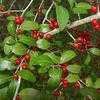
Yaupon Holly typically grows 15-25 feet tall with a similar spread, though dwarf cultivars remain much smaller. Its small, leathery, oval leaves are a glossy dark green, providing year-round structure. In spring, inconspicuous white flowers appear, followed by abundant translucent red berries (on female plants) that persist through winter, providing vital food for birds including cedar waxwings, robins, and mockingbirds.
| Family: | Aquifoliaceae (a-kwee-foh-lee-AY-see-ee) |
| Genus: | Ilex (EYE-leks) |
| Species: | vomitoria (vom-ih-TOR-ee-uh) |
The species name vomitoria references its historical ceremonial use by Indigenous peoples of the Southeast, who brewed a strong "black drink" from the leaves and twigs for purification rituals. The caffeine-containing beverage was consumed in large quantities, sometimes inducing vomiting—hence the name. However, the plant itself is not emetic when prepared moderately.
Today, Yaupon Holly is experiencing a renaissance as a sustainable, local caffeine source. The leaves can be dried and brewed like tea, offering a smooth, earthy flavor with antioxidant properties. In landscaping, it's prized for drought tolerance, salt spray resistance, and adaptability to pruning—making it excellent for hedges, topiary, and native plant gardens. Both male and female plants are needed for berry production.
Hosta plantaginea: The Fragrant Species with Giant White Flowers
Comfortroot (Hibiscus aculeatus)
Hibiscus hamabo: Coastal Species
Mandrinette – Hibiscus boryanus
Furcraea macdougalii: A Giant, Trunk-Forming Relative of Agave
Euphorbia bupleurifolia: A Bizarre, Pineapple-Topped Succulent with a Caudex
Candelilla (Euphorbia antisyphilitica): A Leafless, Wax-Producing Shrub for Extreme Heat
Copyright © www.100flowers.win Botanic Garden All Rights Reserved