


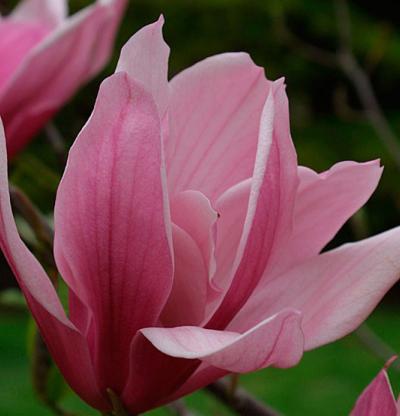
This deciduous tree offers vivid pink flowers like 'Galaxy,' but with fewer, larger, and more deeply-hued blossoms. It grows up to 40 feet tall and forms a broadly oval outline.
Grow in moist, well-drained, preferably acidic to neutral soil in sun or partial shade; magnolias do not tolerate wet feet. Flower buds are susceptible to late frosts; shelter large-leaved species from wind. Prune in late winter or late summer to prevent sap bleeding; prune minimally.
Sow seeds in autumn or stratify. Root softwood cuttings in early summer. Can be layered in early spring, grafted in winter, or propagated by bud in summer.
Bacterial leaf spot, spot anthracnose, canker, dieback, butt rot, powdery mildew, anthracnose, fungal spots, weevils, snails, scale insects, thrips, planthoppers.
Magnolia Scale and Sooty Mold: Insecticide Needed Beyond Hand-Picking
Fragrant Container Plants for a New Jersey Deck
Why Your Hydrangea Stopped Blooming: Pruning Timing Is Everything
Balancing Foliage and Blooms: Fixing Non-Flowering Roses and Powdery Mildew
Deadheading African Violets: Where and How to Remove Spent Blooms
Why Your Mature African Violet Refuses to Bloom—and How to Fix It
Drosera × 'Marston Dragon' Flowering Twice in One Season: Normal or Resource-Driven?
Feverfew for Migraines and Chamomile Tea: Uses and Preparation
Bougainvillea Pruning: Timing Is Everything for Blooms
Anthurium "Pustules" Explained: Normal Seed Development
Kalanchoe Not Blooming: Repotting and Light Cycle Issues
Designing a Cutting Garden: Expert Tips for Long-Lasting Blooms
Growing Hardy Hibiscus in Michigan: A Zone 5 Success Story
Magnolia Trees Damaged by Pool Salt Runoff: Fertilizer & Barrier Strategy
Copyright © www.100flowers.win Botanic Garden All Rights Reserved