


Family: Caesalpiniaceae (ses-al-pin-ee-AY-see-ee)
Genus: Chamaecrista (kam-ay-KRIS-ta)
Species: nictitans
Synonyms: Chamaecrista nictitans subsp. nictitans, Cassia nictitans, Cassia aeschinomene, Cassia lechenaultiana
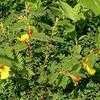
Partridge pea is a fast-growing native annual reaching 1–3 feet tall. The delicate, feathery leaves are sensitive to touch, folding up at night or when disturbed (nyctinasty). Bright yellow, five-petaled flowers with red markings at the base bloom from mid-summer to frost, each about ½ inch across. Flowers give way to flat, linear seed pods that split explosively when ripe, dispersing seeds.
Sow seeds directly in spring after frost danger passes. Prefers full sun and well-drained, sandy or loamy soil. Tolerates poor, dry soils and drought once established. No fertilizer needed—fixes its own nitrogen. Self-seeds readily; ideal for naturalizing in meadows, roadsides, and restoration projects.
A keystone species for pollinators: attracts native bees, butterflies (including cloudless sulphur and sleepy orange), and beneficial wasps. Seeds are a critical winter food for bobwhite quail, turkey, and songbirds. Host plant for several butterfly larvae. Improves soil fertility via nitrogen fixation.
Excellent for wildlife habitat plantings, erosion control on slopes, and native wildflower mixes. Not typically used ornamentally in formal gardens due to its rangy habit.
Creeping Bellflower: Beautiful but Invasive—Restrict to Wild Gardens Only
Trailing Wild Bean (Strophostyles helvola): Native Vine for Wildlife and Nitrogen Fixation
Crow Poison (Nothoscordum bivalve)
Great Design Plant: Partridge Feather (Tanacetum densum ssp. amani)
Mimosa pudica 'Sensitive Plant': Indoor Care for Medium Light and High Humidity
Sweet Pea (Lathyrus odoratus): Fragrant Cool-Season Climbers
Wild Ginger (Hexastylis arifolia): Native Groundcover for Shade
Snake Plant (Sansevieria trifasciata)
False Banana (Ensete ventricosum): Ethiopia's Staple Starch Crop
Texas Hummingbird Mint (Agastache cana): Fragrant, Drought-Tolerant Perennial for Pollinators
Chandelier Plant (Kalanchoe delagoensis): Prolific Plantlets on Tubular Leaves
Copyright © www.100flowers.win Botanic Garden All Rights Reserved