


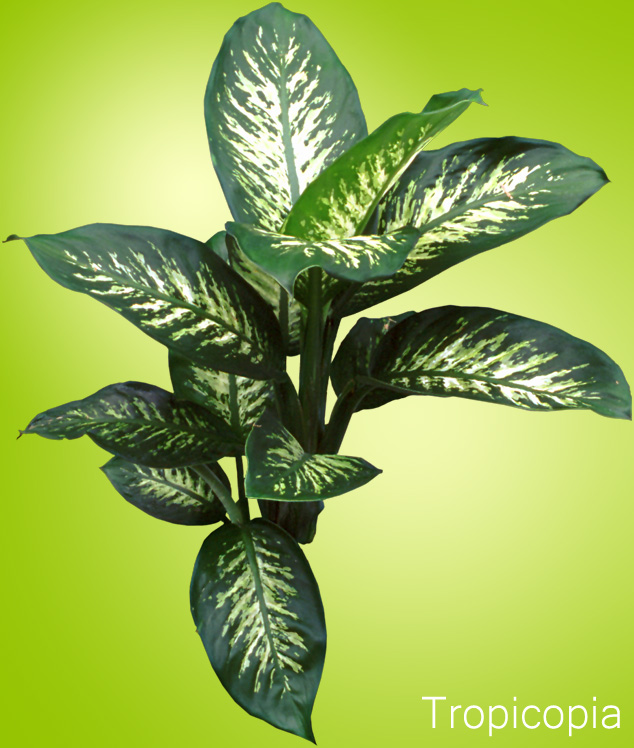
Native from Mexico to Argentina, dieffenbachia (dumb cane) offers large, broad, oblong leaves splashed with cream, yellow, or white patterns. Varieties range from compact tabletop plants to 5–6 foot floor specimens. Fast-growing and tolerant of low light, they become top-heavy without regular pruning.
Medium to low indirect light; water when the top inch of soil dries. Average humidity and temperatures 65–75°F suffice. Repot every 2–3 years; stake tall canes.
The common name “dumb cane” comes from the sap’s ability to cause temporary speechlessness and severe swelling if chewed. All parts are highly toxic due to calcium oxalate crystals. Keep well away from children and pets; wash skin immediately after contact.
Spiders on Houseplants: Beneficial Roommates
Multiple Houseplant Declines After Move: Mealybugs and Chewing Damage
Rubber Tree Worms: Identification and Local Help
Reviving a Pruned Dieffenbachia: Addressing Root Issues
Treating Scale Insects and Pruning an Overgrown Dieffenbachia
Peace Lily (Spathiphyllum): White Blooms in Low Light, NASA Air Purifier
Saving an Overwatered Dieffenbachia from Fungal Rot
Houseplant Oxygen Production: Size & Health Matter
Dieffenbachia Dripping Water: Guttation and Toxicity
Five Ways to Propagate Houseplants: A Complete Guide
Dieffenbachia (Dumb Cane) Care: Tropical Foliage for Low Light
Toxic Houseplants: Identification and Safety for Homes with Children and Pets
Copyright © www.100flowers.win Botanic Garden All Rights Reserved