


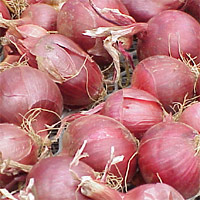
Hundreds of onion types exist, varying in size, form, and sweetness/pungency. They're essential in cuisines worldwide.
Onions are a cool-weather crop requiring a long growing season, so they're usually started from sets (small bulbs). However, set variety selection is often limited; for unusual varieties, start indoors from seed. Stronger-flavored onions store longer; mild, sweet types are more perishable.
Choose a site with full sun and well-drained soil. Loosen soil to 12–15 inches and mix in a 2- to 4-inch layer of compost.
Select sets ½–¾ inch in diameter for best results. Plant early in spring—onions prefer cool starts and warm maturation. No trenches needed: grasp sets at the pointed end, root end down, and push into prepared soil to the full depth of the bulb. Soil should barely cover the top. Plant tiny sets at least 1 inch deep for good soil contact. Space sets 4–6 inches apart. If starting from seed, sow indoors 2–3 months before last frost or direct-sow as soon as soil can be worked. Transplants can be set 4 inches apart after heavy frost danger passes. In mild winter areas (South/West), grow short-day varieties in fall/winter for spring harvest.
Keep onion bed well-weeded. Water during summer if rainfall is less than 1 inch per week. Contact your extension office for root maggot controls.
Harvest when ¼ of tops have naturally fallen over and bulbs have papery skins. Pull bulbs and dry in a warm, airy, dark place for 1–2 weeks. Once dry, hang storage onions in mesh bags in a cool, dark location.
Growing a Sprouted Onion as a Houseplant
Saving Seeds from a Flowering Onion: Viability and Timing
Teak Outdoor Dining Sets: Timeless Elegance, Unmatched Durability
How to Plant Onions: Varieties, Timing, and Techniques for a Bountiful Harvest
Nodding Onion (Allium cernuum): Adaptable Native with Drooping Pink-Purple Flowers
Ornamental Onion 'Schubertii' (Allium schubertii): Explosive, 18-Inch Fireworks of Pink Flowers
Ornamental Onion (Allium senescens): Twisty Foliage and Pink Summer Blooms
Persistent Scale on Pregnant Onion and Sansevieria: Root Cause and Eradication
Pregnant Onion (Albuca bracteata): Curious Bulb with Baby Offsets
Turkestan Onion (Allium karataviense): Broad Leaves and Pink Globes
Onions Bolting: What to Do When Flowers Appear Early
Tumbleweed Onion Identification: Allium schubertii's Dramatic Seedheads
Wild Onion (Allium canadense) and Wild Garlic: Edible but Pungent
Copyright © www.100flowers.win Botanic Garden All Rights Reserved