


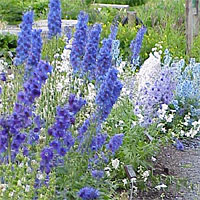
Delphinium is a stately, elegant perennial, a staple of English cottage gardens. Dark green glossy foliage topped by huge spikes of showy spurred flowers in early summer. Also called larkspur (usually annual types).
Thrives in cool, moist summers; struggles in hot, dry heat (newer varieties more heat-tolerant). Sizes: dwarf <2 feet to towering 6 feet. Colors: blue, red, white, yellow; rich blues especially prized. Blooms late spring to early summer; good for cutting.
Full sun to light shade, well-drained soil. Protect from strong winds to prevent top-heavy tall varieties from blowing over.
Spring, space 1–3 feet. Loosen soil 12–15 inches, add 2–4 inches compost. Plant at container depth, water thoroughly.
Spring: thin compost + 2-inch mulch. Water if rainfall <1 inch/week—soil should never dry out. Stake tall varieties to prevent hollow stalks snapping. Deadhead after flowering for rebloom. After killing frost, cut stems to 1–2 inches. Divide every 3–4 years in spring.
Root Rot in Garden Beds: Diagnosing and Treating Soil-Borne Fungal Disease
The Ideal Potting Mix for Container Plants: Peat, Soil, and Ratios Explained
Magnesium for Wheat: Soil Test First, Then Decide
Safely Lowering Soil pH for Acid-Loving Plants
Preparing Soil for a New Rose Bed: Organic Matter and Fertilizer Tips
Amending Clay Soil: Mix Compost Thoroughly, Avoid Layering
Lowering Extremely Alkaline Soil (pH 8+): Why Gypsum Is Wrong and Which Amendments Work
Tomato Early Blight and Gardener Allergies: Fungicide Treatment and Personal Protection
Pure Mushroom Compost in Raised Beds: Why Blending with Native Soil Prevents Water Extremes
Testing Soil pH for Blueberries and Estimating Yield from a Small Planting
Improving Clay Soil for Root Vegetables in the Orkney Islands
Rebalancing Soil High in Phosphates, Potassium, and Magnesium
Stinkhorn Mushrooms in Potted Plants: Harmless but Unsightly
Black Honeycomb Fungus in Flower Bed: Slime Mold or Something Worse?
Copyright © www.100flowers.win Botanic Garden All Rights Reserved