


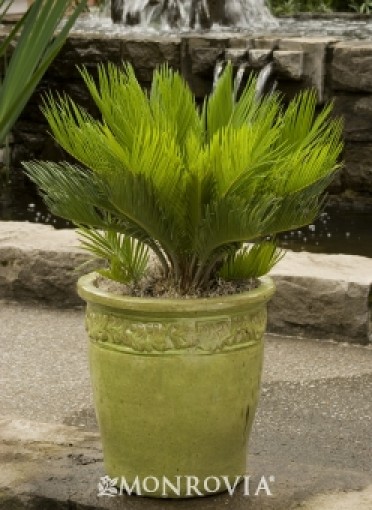

Despite its common name, the Sago Palm (Cycas revoluta) is not a true palm but a cycad—an ancient plant lineage dating back to the Mesozoic era. Its stout, shaggy trunk supports a crown of long, pinnate leaves with numerous stiff, narrow leaflets arranged in an open rosette. The effect is distinctly tropical and architectural.
Use Sago Palm as a striking specimen, in tropical-themed plantings, or in containers for patio drama. Its slow growth and manageable size (5–10 feet tall, 7–12 feet wide) make it suitable for smaller spaces. Drought-tolerant once established, it thrives in full sun with minimal care.


Sago Palm One-Sided Frond Drop: Bacterial Infection from Scale and Atomic Grow
Sago Palm Stops Producing Leaves: New Disease in Florida
Managing Asian Scale on Sago Palms in Florida
Sago Palm Pruning: When, How Much, and Propagating Offsets
Sago Palm (Cycas revoluta) Care: Not a Cactus, Finger-Test Watering, Normal Leaf Aging
Understanding White Tips on Sago Palm Fronds: Drought Stress and Natural Growth Cycles
Sago Palm Yellowing: Either Over- or Underwatering—Balance Is Critical, Pray for Recovery
Follow-Up Care for Sun-Stressed Sago Palms and Alternative Species
Comprehensive Sago Palm Care: Fungicide, Scale Control, Repotting, and Watering
Cycas revoluta (Sago Palm) Care and Identification
40-Year Ponytail Palm Crisis: Crown Rot, Leaf Drag, and Recovery
Butterfly Palm Decline from Radiator Heat: Humidity and Misting Solutions
Copyright © www.100flowers.win Botanic Garden All Rights Reserved