


Fast-growing shade trees are landscape essentials, offering quick relief from summer heat, boosting property value, and supporting wildlife. Strategically placed, they can reduce home cooling costs by up to 10%. Beyond aesthetics, they provide privacy, improve air quality, and create habitat.
When choosing a shade tree, consider growth rate, foliage color, disease and pest resistance, longevity, leaf shedding habits, and canopy coverage.
This speedster can shoot up over 18 feet in its first season, maturing at 40–50 feet tall and 30–40 feet wide. It blooms in winter with large pink flowers, thrives in any soil—even highly acidic—and is drought-tolerant and pest-resistant.
The fastest-growing oak, it adapts to diverse soils and climates worldwide. It prefers full sun. Its foliage turns yellow then golden-brown in autumn, persisting longer than many maples. Mature height: 40–50 feet, with a spread often exceeding its height.
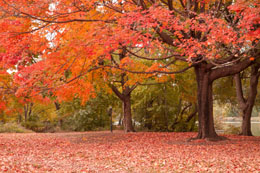
Renowned for vibrant foliage, red maples are versatile across climate zones and resist pests and diseases. They favor acidic, well-drained soil with partial to full sun. At maturity, they reach 50–60 feet tall with a 40–50 foot spread. Popular cultivars include 'Summer Red', 'October Glory', and 'Scarlet Red'.
Prized for its cinnamon-colored, exfoliating bark and medium-green leaves that turn yellow in fall. It handles both wet and dry soils, prefers slightly acidic to neutral pH, and tolerates intense summer heat. Mature size: 40–70 feet tall, 30–40 feet wide.
Pro tip: Buy younger, smaller saplings—they establish faster and outpace larger specimens in growth rate.
Diagnosing and Treating Browning Fraser Firs and Cedar Trees
Lichens on Trees: Harmless Indicators of Stress, Not Killers
Magnolia Stress in Galveston: Semi-Evergreen Leaf Drop, High-P Fertilizer for Blooms
Robins in Garden: Netting Berries, Feeding Seed Elsewhere
Assessing Survival of Transplanted Trees and Shrubs After One Year
Phototropic Lean in Green Giant Arborvitae: Staking Limitations
Walnut Caterpillars Defoliating Pecans: Identification and Control
Oaks Falling with Internal Decay: Hazard Tree Assessment Needed
Cypress Trees Submerged in Pond: Likely Dead
Cottonless Cottonwood Sparse Foliage: First-Year Root Establishment
Mushrooms on Confined Urban Oaks: What Those Cold-Weather Fungi Mean
Venus Flytraps Flooded by Heavy Rain: Quick Recovery
Best Indoor Tree for Denver South-Facing Window: Ficus benjamina
Copyright © www.100flowers.win Botanic Garden All Rights Reserved