


In 2004, gardeners reported a surge in bizarre coneflowers: misshapen cones, tiny secondary flowers emerging from the center, and green petals instead of purple or white. The culprit: aster yellows phytoplasma—a bacterium-like organism spread by planthoppers and leafhoppers.
Planthoppers leave white, waxy residue on vertical stems of hosta, aster, azalea, and black-eyed Susan. Leafhoppers also transmit the pathogen.
Phytoplasma cannot be cured; prevention and sanitation are the only controls.
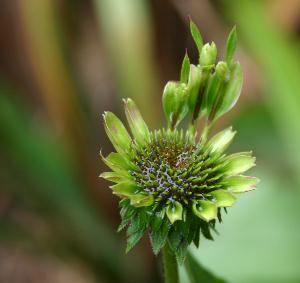
Green petals on coneflower (phyllody)
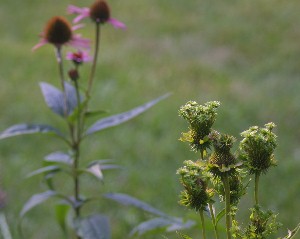
Tiny flowers emerging from coneflower cone

Distorted coneflower blooms
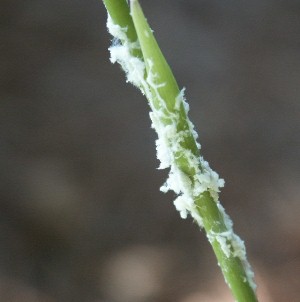
Planthoppers on plant stem
Deer-Resistant Flowers: 8 Beautiful Plants Bambi Won't Eat
Vinca (Periwinkle): Heat-Loving Annual for Nonstop Color
Anemone Plant Guide: Growing Windflowers in Your Garden
Clivia Plant Care: Growing Kaffir Lily for Spectacular Blooms
Growing Coneflower (Echinacea): Native Beauty for Pollinators
Showbiz Rose (36″ Standard): Fire-Engine Red Floribunda for Hedges and Borders
Showbiz Rose: Fire Engine Red Blooms, Excellent for Low Hedges
Fairy Castle Cactus Straw Flowers Are Fake; Real Flowers Need Years of Height
Cymbidium Flowers Turning Black: End of Bloom or Problem?
Oncidium Bud Blast: Wilting Flowers, Unopened Buds, and Care Corrections
How to Plant Perennials for Year-Round Garden Color
Plumeria (Frangipani) Care: Tropical Fragrance in Any Climate
Zebra Plant (Aphelandra squarrosa): Care Guide for Striking Flowers and Foliage
Copyright © www.100flowers.win Botanic Garden All Rights Reserved