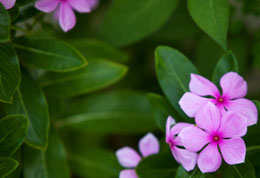
Vinca (Catharanthus roseus), also called Madagascar Periwinkle or Annual Vinca, is a workhorse of the summer garden. Glossy green foliage and phlox-like flowers in pink, red, white, purple, and bicolors bloom relentlessly from late spring to frost—unfazed by heat, humidity, or drought. Not to be confused with perennial Vinca minor/major (groundcovers), this tropical native is grown as a warm-season annual.
Quick Reference
| Trait | Details |
|---|
| Botanical Name | Catharanthus roseus |
| Type | Tender perennial grown as annual |
| Height/Spread | 12–18" tall, 12–18" wide |
| Bloom Season | Late spring to frost |
| Colors | White, pink, rose, red, purple, lavender, apricot; often with contrasting eye |
| Light | Full sun (best) to part shade |
| Soil | Well-drained, slightly acidic (pH 6.0–6.5) |
| Water | Drought-tolerant; water when dry |
| Deer/Rabbit Resistant | Yes |
Popular Series
- 'Cora' / 'Cora Cascade': Disease-resistant (Phytophthora); upright or trailing.
- 'Pacifica': Early, uniform, compact.
- 'Mediterranean': Trailing habit; great for baskets.
- 'Titan': Large flowers, heat-loving.
- 'Valiant': Vigorous, disease-resistant.
- 'Soiree': Double-flowered, rose-like.
Growing from Seed
- Timing: Start indoors 10–12 weeks before last frost.
- Medium: Sterile seed-starting mix.
- Sowing: Press seeds onto surface; cover lightly (⅛").
- Germination: 75–78°F (24–26°C); 10–14 days in darkness (cover with black plastic).
- Light: Move to bright light immediately after emergence.
- Transplant: To cells at 2"; to 4" pots at 3–4".
- Harden Off: Gradual exposure over 7–10 days.
- Plant Out: After frost, when soil ≥65°F (18°C).
Direct Sow (Warm Climates Only)
After soil warms, sow in prepared bed; thin to 12". Slower start than transplants.
Care for Peak Performance
- Water: Water deeply at planting. Then allow soil to dry between waterings. Vinca hates wet feet—root rot (Phytophthora) is the #1 killer.
- Fertilize: Light. Slow-release at planting. Monthly liquid feed (balanced) if needed. Avoid high phosphorus.
- Pinching: Pinch at transplant to encourage branching.
- Mulch: Thin layer to conserve moisture; keep away from stems.
- Deadheading: Not required—self-cleaning.
Container Culture
- Use well-draining potting mix + perlite.
- Ensure drainage holes; don't use saucers.
- Water when top 1" dry.
- Trailing varieties ('Mediterranean', 'Cora Cascade') excel in hanging baskets.
Common Problems
| Issue | Cause | Fix |
|---|
| Yellow leaves, wilting | Overwatering / Phytophthora root rot | Improve drainage; water less; fungicide drench (mefenoxam) if caught early |
| Leggy, few flowers | Too much shade / excess nitrogen | Move to sun; reduce fertilizer |
| Aphids/Whiteflies | Common pests | Blast with water; insecticidal soap; encourage beneficials |
| Botrytis (gray mold) | Cool, wet, crowded | Space plants; water at base; remove affected |
Medical Note
Vinca produces vincristine and vinblastine—critical chemotherapy drugs for leukemia, lymphoma. Do not self-medicate. Plant is toxic if ingested in quantity.
Design Ideas
- Mass in beds for solid color blocks.
- Edge sunny borders, driveways.
- Mix with zinnias, salvias, angelonia, lantana.
- Containers: thriller (upright) + filler (vinca) + spiller (trailing vinca).
- Pollinator gardens: attracts butterflies, bees.
Vinca asks for sun, drainage, and restraint with water—in return, it delivers months of glossy, colorful resilience. A true "plant and prosper" annual.
Copyright © www.100flowers.win Botanic Garden All Rights Reserved


