


While hardy hibiscus varieties shrug off Atlanta winters, their tropical cousins need a helping hand to survive the cold. If your tropical hibiscus has flourished outdoors all season, it’s time to prepare it for indoor life before the first frost arrives.
Start by cutting the plant back to a smaller, more manageable size. This reduces stress on the root system and makes the plant easier to accommodate indoors. Aim to preserve as many healthy leaves as possible during pruning.
Place the hibiscus in the brightest location you have—ideally a south-facing window where it will receive at least six hours of direct sunlight daily. Tropical hibiscus thrives on light, and insufficient sun leads to leggy growth and fewer blooms.
Don’t panic if the plant sheds a few leaves during the winter months. This is a normal response to lower light and humidity indoors. Keep the soil evenly moist (but not soggy) and avoid fertilizing until spring.
When nighttime temperatures consistently stay above 50°F (usually mid-April in Atlanta), begin hardening off the plant by placing it outdoors in a shaded spot for a few hours each day, gradually increasing its exposure. Once acclimated, it will burst forth with vigorous new growth and flowers.
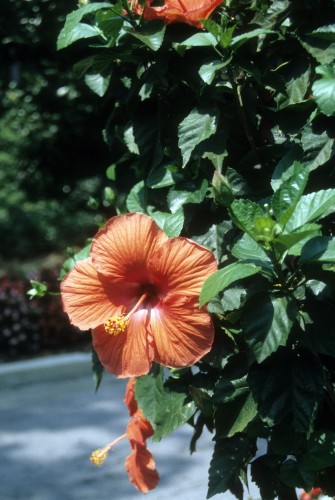
Tropical hibiscus in full bloom
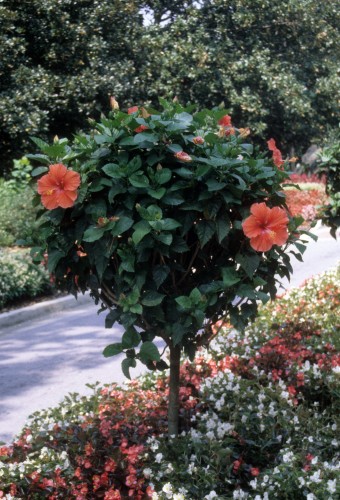
Healthy tropical hibiscus foliage
Why Your Indoor Hibiscus Is Wilting Between Waterings
Tropical Hibiscus 'Enlightenment' – Hibiscus rosa-sinensis
Tropical Hibiscus 'Sunshower' – Hibiscus rosa-sinensis (Bahama Bay Series)
Tropical Hibiscus 'Heartbeat': Schlueter's 2004 PP15423
Tropical Hibiscus 'Snowfire': Schlueter's 2002 PP14164 Bahama Bay
Tropical Hibiscus 'Heart Of My Heart': Black's 2004 Deep Affection
Tropical Hibiscus Indoors: Not for Beginners
Tradewinds Hibiscus 'Montego Wind' Small Blooms: Stress Symptom
Overwintering Hibiscus Indoors Near a Chlorinated Pool
Tropical Hibiscus 'Brilliant' (Hibiscus rosa-sinensis)
Tropical Hibiscus 'Rum Runner' (Hibiscus rosa-sinensis)
Copyright © www.100flowers.win Botanic Garden All Rights Reserved