


I love using the straw bale gardening method with a sturdy trellis for tomatoes, and Kentucky Wonder green beans need a taller trellis than I care to climb. When I saw a makeshift arched trellis made from concrete re-mesh, the idea clicked: I could grow both favorite vegetables on either side of a wire arch accessible from ground level. I remembered how much fun the kids had under our "pickle teepee"—sticks, strings, and cucumber seeds—where they easily picked cukes hanging inside. I hoped for a similar experience with tomatoes and beans.
The re-mesh dimensions closely matched cattle panels—rigid fencing sections sold at farm supply stores. We'd seen single panels used as arched trellises before, so this year we built a neater, stronger, longer-lasting arched trellis and hoop house using cattle panels.
The following is a short slideshow video of last year's tomato and bean arched trellis.
There are countless ways to erect such a structure; this is our method based on available materials, skills, and site limitations. The basics: cattle panels are rigid, strong, yet flex just enough for this application. Note: Various grades, styles, and price ranges exist—choose what suits your needs and budget.
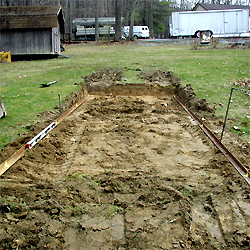
The hillside was excavated about two feet deep at the high end to level the site.
Angle iron rails were installed on either side of the excavated area—leveled, parallel, and square. This required additional digging in spots or shimming with bricks.
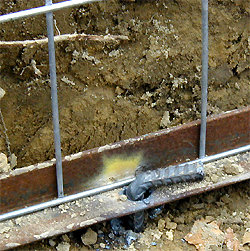
The angle pieces were anchored with L-shaped rebar driven through holes burned through the angle sides.
Close-up of an anchor showing rebar placement through holes and into the ground.
We used large plastic tent stakes to hold concrete re-mesh for last year's trellis; they may work for cattle panels too.

The anchors hold the angle iron when cattle panel ends are flexed into position between the two angle pieces.
Wire ties connected and held the cattle panel sides together, tightening the structure.
Metal fence posts supported the additional weight of mature fruiting vines and stiffened the trellis hoop.
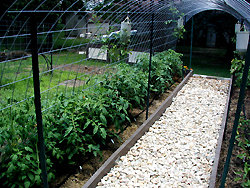
A view from inside the trellis.
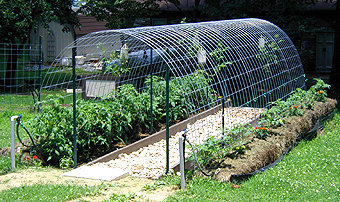
A view of the rear corner of trellis.
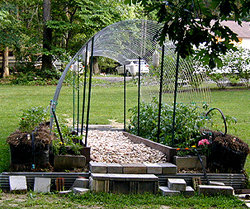
Here is the cattle panel arched trellis in mid-June 2010, with plants growing inside in beds and outside in hay bales. We're still working on block steps, retaining walls, and a small patio in front. We added a ton of river rock for a center path and installed a soaker hose watering system.
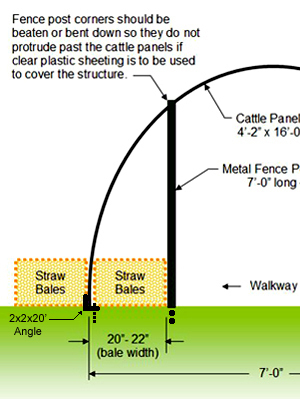
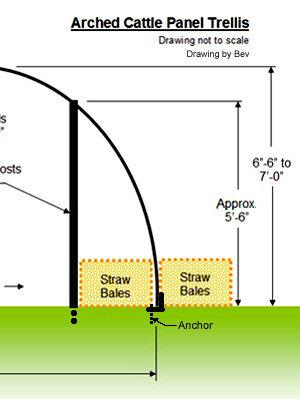
(Click to view a larger printable image.)
I hope our experience with the arched cattle panel trellis shows you another option for supporting tall garden plants while harvesting from the ground. Have a great garden season!
Container Gardening Design: 50+ Creative Placements for Pots & Planters
Building a Deck: Design, Materials & Contractor Guide for Home Expansion
Get Competitive Quotes for Thermodynamic Panel Installation with SensibleQuote
Elevate Your Home with Sliding Glass Doors: Styles and Benefits
How to Build a Small Greenhouse: A Step-by-Step Guide for Beginners
Container Gardening Ideas: Transform Every Corner of Your Home & Garden
Squirrels on Roof via Power Lines: Call Utility, Don't DIY
Severe Indoor Flea Infestation: Vacuum, Fumigate, Treat Pets
Anchoring a Trellis to a Stucco Wall Without Damage
Using Manure Safely in Rose Gardens
ZZ Plant Floppy Stems: Light and Water Fixes
Lucky Bamboo Propagation: From Water Culture to Soil and Cuttings
Copyright © www.100flowers.win Botanic Garden All Rights Reserved