


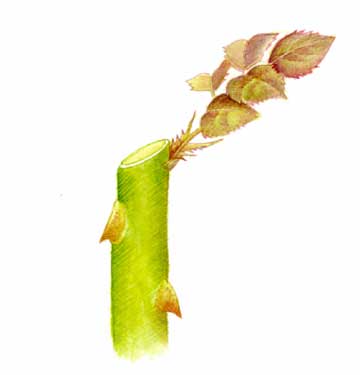
The sap will rise from the rose cane and run down the opposite side of the leaf when cut correctly.
1. Make pruning cuts at a 45-degree angle, about ¼ inch above a leaf axle with a dormant eye.
2. Choose an eye on the outside of the cane and slope the cut down and away on the opposite side. This allows excess sap to rise and seal the cut without interfering with the developing eye. Pruning to an outward-facing bud promotes outward growth, opens the plant to air circulation, creates pleasing shapes, resists disease, and prevents tangled canes. Cuts closer than ¼ inch may damage the eye; cuts higher leave a stubble that harbors pests and disease.
3. If the rose bush has foliage present, the cut location is easy to spot. Without foliage, find the dormant eye by locating where foliage was once connected—it's normally visible as a slight swelling above the cane surface.
4. Use this same pruning technique when cutting stems for display and when removing spent blooms. Remember to sharpen pruning tools periodically—either do it yourself or have a professional do it.
5. Wipe metal surfaces after each use with a soft, lightly oiled rag to prevent rust. Store tools in a dry area.
Pruning Mature Locust Trees: Timing, Fertilizing, and Realistic Expectations
Pruning Knockout Roses: The Simple Rules for Maximum Blooms
Tips for Pruning Roses: Tools, Timing, and Techniques
Rose Pruning Basics: When, How Much, and Tools
Expert Pruning Secrets for Exquisite Roses
Poinsettias: The Iconic Christmas Plant—History, Care, and Myths
Pruning Your Summer-Blooming Hydrangea (Snowball Bush): Timing and Technique
Clematis Pruning Guide: When and How to Cut Back Your Vine
Rose Pruning: Late Winter + Sulfur Spray
Azalea Pruning: Timing and Technique for Maximum Blooms
How to Successfully Propagate English Ivy from Cuttings
Propagating a Cherry Tree for a Friend: Suckers, Layering, and Cuttings
Copyright © www.100flowers.win Botanic Garden All Rights Reserved