


Perennial, Lilium lancifolium, Hemerocallis fulva
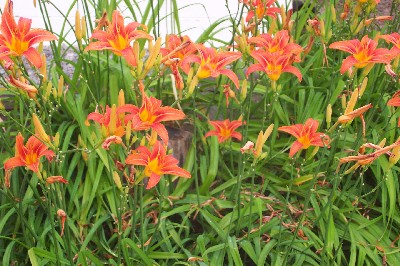
Most call these orange lilies or tiger lilies. Some call them "ditch lilies" because this prolific wildflower commonly grows in ditches across America.
There's confusion about tiger lilies. An oriental variety is similar but propagates through bulbs at leaf axils. The common wildflower tiger lily propagates via tuberous roots. Both have edible roots and medicinal uses. This article focuses on the wildflower variety.

Did You Know? Tiger lilies have medicinal uses: they relieve congestion and pregnancy nausea/vomiting.
Dig up and separate tuberous roots. Transplant in spring or fall. Water thoroughly after transplanting.
Easy to grow—at home in nature or your garden.
Plant tuberous roots in groups. They don't mind crowding and look best as a large, close patch of bright orange flowers.
Tiger lilies need little attention. They prefer moist to wet soils—that's why they thrive in ditches. Fertilizer isn't needed except in the poorest soils. They thrive in most U.S. regions without winter protection.
Once established, they thrive year after year.
Did You Know? Native Americans ate the tuberous roots, baking them like potatoes.
Forget insect and disease problems—this prolific grower sees few. If problems occur, use insecticide or fungicide as needed.
Plants can be bothered by slugs and snails.

Peace Lily Bloom Cycle and Brown Tip Solutions
Replanted Tiger Lilies Yellowing: Transplant Shock
Fall Flowers: Autumn's Rich Palette for Weddings and Gardens
How to Remove Spent Peace Lily Flowers
Roses vs. Calla Lilies: Growing and Care Comparison
Oriental Lily Care: Planting, Growing & Year-Round Maintenance
Exploring Flower Varieties: From Garden Classics to Exotic Hybrids
The Deeper Meaning of Flowers: Beauty, Memory, and Emotion
Buttercup Flowers: Cheerful Beauty with a Toxic Secret
Marigold Magic: Types, Cultivation & Medicinal Power
Hydrangeas: Summer-Long Color and Evolving Beauty
Kaffir Lily (Schizostylis): A South African Beauty for Damp Gardens
Peace Lily Care: The Ultimate Guide to Growing Spathiphyllum
Copyright © www.100flowers.win Botanic Garden All Rights Reserved