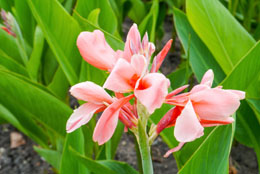
Canna lilies (Canna × generalis) deliver instant tropical drama—paddle-shaped leaves in green, bronze, or striped, topped with vibrant iris-like flowers in hot colors. Not true lilies, these rhizomatous perennials are kin to bananas and ginger. Hardy in zones 7–11, they're grown as annuals or lifted for winter elsewhere. Fast, bold, and floriferous, cannas turn any sunny spot into a jungle oasis.
Key Features
- Height: 3–6 ft (dwarf 2–3 ft; giant 8+ ft)
- Foliage: Broad, flat, banana-like; green, bronze, burgundy, striped (e.g., 'Phasion', 'Stuttgart')
- Flowers: 3–5" wide; red, orange, yellow, pink, cream, bicolor; late spring to frost
- Growth: Rhizomes (underground stems); rapid, clump-forming
- Hardiness: Zones 7–11 (mulch heavily in 7); lift in colder zones
- Deer Resistance: High
Popular Cultivar Groups
- Dwarf (2–3 ft): 'Cannova' series (early, compact, great for pots), 'Lucifer' (red/yellow), 'Tropical White'.
- Medium (4–5 ft): 'Australia' (black foliage, red flowers), 'Pretoria'/'Bengal Tiger' (striped leaves, orange), 'Wyoming' (bronze leaves, orange).
- Tall (6+ ft): 'Musifolia' (huge banana-like leaves, grown for foliage), 'Phaison' (psychedelic stripes).
- Water Cannas: 'Erebus', 'Longwood'—grow in shallow water/bog.
Planting Cannas
Timing
- Zones 7+: Plant outdoors after frost.
- Colder zones: Start indoors 4–6 weeks early in pots; transplant after frost. OR direct sow when soil ≥65°F (18°C).
Site & Soil
- Sun: Full sun (6+ hrs) for best bloom/color.
- Soil: Rich, moisture-retentive, well-drained. Amend with compost/manure.
- pH: 6.0–6.5.
Planting Steps
- Loosen soil 12–18"; mix in compost + balanced fertilizer.
- Dig 4–6" deep hole; lay rhizome horizontally, eyes up.
- Cover with 2–3" soil; water thoroughly.
- Space: 12–18" (dwarf), 18–24" (tall).
- Mulch 2–3" to conserve moisture.
Care for Maximum Impact
- Water: Cannas love moisture—1–2" per week. Don't let dry out.
- Fertilize: Heavy feeders. Monthly balanced fertilizer (10-10-10) or slow-release at planting + liquid feed monthly.
- Deadhead: Remove spent flower stalks to encourage rebloom.
- Prune: Remove tattered leaves; cut back frost-killed tops in fall.
- Pests: Few. Canna leafroller (caterpillar in rolled leaves)—pick off or Bt. Japanese beetles—hand pick. Rust (fungal)—improve air flow, avoid overhead water.
Overwintering (Zones <7)
- After frost kills foliage, cut stems to 4–6".
- Dig rhizomes carefully; shake off soil.
- Cure 1–2 weeks in airy, shaded spot (50–60°F).
- Store in peat, vermiculite, or paper bags at 40–50°F (4–10°C).
- Check monthly; mist if shriveling; discard rot.
- Divide in spring: cut rhizomes into sections with 2–3 eyes each.
Container Growing
- Use large pots (15+ gal for tall; 5+ gal for dwarf).
- Quality potting mix + compost.
- Full sun; daily water in heat; weekly fertilizer.
- Overwinter: move pot to cool, dark, dry; water once/month. Or lift rhizomes.
Design Uses
- Tropical Borders: Back of bed with bananas, elephant ears, hibiscus.
- Poolside/Patio: Large containers for instant resort vibe.
- Rain Gardens/Bog: Water cannas thrive in wet spots.
- Cut Flowers: Stems last 5–7 days; sear ends.
- Foliage Focus: 'Musifolia', 'Phaison' grown for leaves; remove flower spikes.
Invasive Note
Cannas can spread aggressively in warm, moist climates (especially Southeast US). Deadhead to prevent seeding; contain rhizomes with barriers; avoid planting near wetlands.
For gardeners craving bold texture and saturated color without fuss, canna lilies deliver a vacation-worthy display from a single rhizome.


