


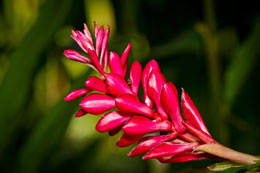
Ornamental ginger (Alpinia, Hedychium, and related genera) brings a touch of the tropics with lush foliage and exotic, fragrant blooms. While related to culinary ginger (Zingiber officinale), these 1,300+ species in the Zingiberaceae family are grown for beauty, not the rhizome. In Hawaii, their vibrant flowers are woven into leis, symbolizing love and prosperity.
Light: Partial shade to filtered sun; protect from harsh afternoon rays. Deep shade reduces flowering.
Soil: Rich, well-drained, high in organic matter. Amend with compost.
Plant rhizomes horizontally 2–3 inches deep in spring after frost danger passes. Space 24–36 inches apart. Water well and mulch heavily.
In zones below 8, grow in containers and bring indoors before temperatures drop below 50°F (10°C). Keep in bright light, water sparingly, and maintain humidity. Alternatively, dig rhizomes, clean, and store in peat/vermiculite at 50–55°F.
Pro Tip: Patience is key—most ornamental gingers need 1–2 years to establish before flowering prolifically. The wait rewards you with some of the garden's most exotic, fragrant blooms.
Saving Flower Seeds: Hybrid vs. Open-Pollinated
Cymbidium Flowers Wilting Early: Causes and Longevity
Gloxinia Stem Weakness: Pinch Blooms to Build Strength
Seed Pods on African Violets: What They Are and What to Do
Corn Plant Flowering: Age, Root Binding, and Spike Removal
Anomalous Winter Flowering in Sarracenia flava var. maxima
Another Drosera capensis Flower Stalk Accident: Expert Reassurance
Mystery Plant ID: Tropical Iris (Neomarica/Dietes Hybrid)
Identifying a Mystery Garden Plant: Delphinium Confirmed
Anthurium Flowers Closing Prematurely
Hydrangea All Leaves, No Flowers: Fertilizer, Soil, and Pruning
Copyright © www.100flowers.win Botanic Garden All Rights Reserved