


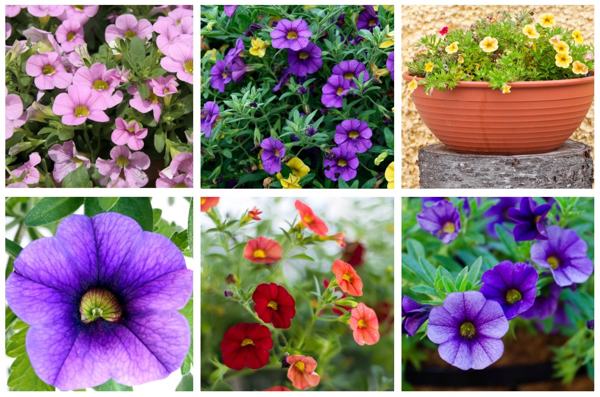
 The credit for introducing Million Bells goes to Dr. Yasuyuki Murakami and Dr. Kenichi Suzuki from Suntory Group. Upright blue and Upright Pink were the first cultivars to be introduced in the early 1990s. Most of the Million Bells cultivars that are available in the market are hybrid cultivars created by the Suntory group. Wine, Tropical Delight, and Bouquet Amethyst are the three new colors that were introduced in 2013.Suntory Holdings Co., a Japanese brewing and distilling company that was originally into breeding grapes, barley, yeast, etc., for producing whiskey, wine, and beer, ventured into flower breeding in the late 1980s. They introduced cultivars of Million Bells, which are crosses or hybrids with the original Calibrachoa species. Grown as ornamental plants owing to their prolific flowering, Million Bells come in a variety of vibrant colors such as violet, blue, pink, red, magenta, bronze, yellow, and white.
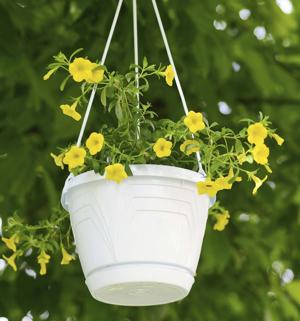 Yellow Million Bells flowers in a Hanging Basket✦Plant Type: Perennial, Annual
 How to Care for Million BellsIf you are planning to include this flowering plant in your garden, you need to be aware about the conditions in which the plant will actually be a prolific bloomer, which is one of its most noteworthy characteristics. To be able to achieve that, here's what you need to do:Light Requirements
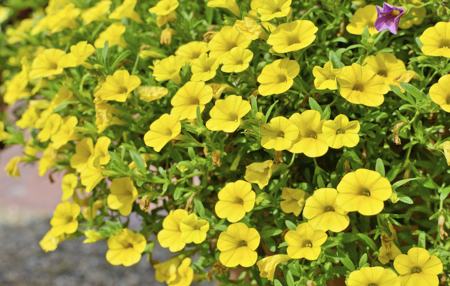 This flowering plant grows best in full sun. Million Bells will do very well if they receive at least 6 hours of full sun. So, it would be best to place the containers, window boxes, or the hanging baskets in regions that get full sun. If it doesn't receive ample sunlight, the number of blooms will certainly be less. Also, the foliage color might also change to light green.Moisture/WateringYou may water the plant generously in dry periods to ensure that the soil doesn't become dry. However, average watering will suffice. Refrain from excessive watering during winter. In case one goes on a watering spree, the soil might become soggy, which in turn might increase the possibility of root rot. For Million Bells in hanging baskets or containers, the soil needs to be evenly moist. Make sure that you water thoroughly before and after applying the fertilizer.Soil pH and DrainageWhile growing any plant, one should make it a point to learn about the soil pH. Million Bells are likely to thrive in acidic soil, which has a pH below 6. In case the pH is higher, you can add acidic organic mulch (Pine needles) to lower the pH. The soil should also be well-drained, otherwise the likelihood of root rot increases.FertilizerUse a slow release fertilizer while planting. The soil can be amended with compost. In the growing season, a liquid or soluble organic fertilizer can be used every two weeks. Yellowing of new, tender leaves should not be ignored. Use an organic fertilizer that will help maintain the pH of the soil. You can use fertilizers with the N:P:K ratio of 2:1:2. Yellowing of the leaves could be a sign of iron deficiency. You could use an iron-rich fertilizer in such cases. Make sure that you apply the fertilizer as per the directions given on the label.PruningThere's a reason why this flowering plant is placed in the low-maintenance category. Deadheading, which refers to the removal of dead, spent flowers for promoting new growth, is not a requirement for this plant. This plant is self-cleaning, as the spent flowers drop on their own after the bloom season. However, pinching Million Bells regularly will certainly help promote a compact growth habit. Trim the plant, especially when it is beginning to look dull. Remove dead, diseased foliage. Pinching the stem will encourage branching.Plant DiseasesMillion Bells are believed to be resistant to diseases. However, the plant can get affected by root rot. An aphid infestation could cause yellowing of the leaves. As aphids suck the plant's sap, the leaves start wilting. The infestation could also lead to stunted growth. Therefore, check your plants on a regular basis. Spraying the plant with a strong stream of water can dislodge aphids from the plant. Using an organic insecticide would help in case of a heavy infestation.A smaller version of petunias with the added benefit of profuse flowering, Million Bells would certainly be a welcome addition to any garden. To add to that, this plant also attracts butterflies and hummingbirds. So, go ahead and check out Calibrachoa cultivars or series that offer flowers of vibrant hues. If you are more interested in bigger blooms, you could opt for Petchoas, which is a cross between Million Bells and petunias.
Copyright © www.100flowers.win Botanic Garden All Rights Reserved