


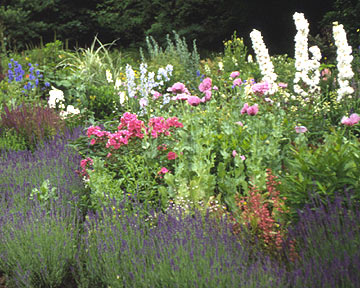
 Pastel varieties of annual poppies
and phlox, along with white
delphinium and fragrant lavender,
make a strong statement in this
border.
Pastel varieties of annual poppies
and phlox, along with white
delphinium and fragrant lavender,
make a strong statement in this
border.
Pastels gain their soft glow from the white added to the bold parents. Pale pinks, blues, lavenders, and yellows light up shady places. In gloomy climates, pastels shine. In sunnier climes, they offer visual refuge and a calming influence.
Pastels radiate most strongly in indirect light and on overcast days. Consider planting the subtle colors where the morning or evening light lingers. Swathes of pale-color flowers guide the way along a moonlit garden path. They brighten areas, such as a patio or deck, where you're likely to spend evening hours relaxing. Your palette can include more than flowers. The gleam of a pale tree trunk or silver leaves emanating light has just as much impact in a pastel garden's magic.
Against the backdrop of a brick wall or a dark, unpainted fence, pastel flowers gleam. They create a spotlight when planted around a focal point in the garden, such as statuary or a fountain, especially when viewed from a distance.
Related Slide Show: Best Pink Flowers for Your Garden
continue reading below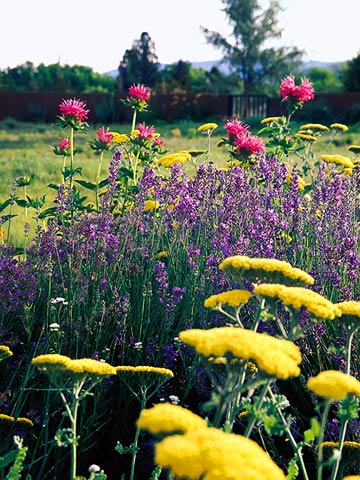 The delicate hues of Mexican
primrose form a powerful contrast
with spiky agave in this dessert
garden.
The delicate hues of Mexican
primrose form a powerful contrast
with spiky agave in this dessert
garden.
An entire contingent of peacemaking pastel colors tends to appear tepid when planted together. Add a little visual friction in the form of contrasting colors, along with framing greens and silvers, to separate the pastel shades.
Pastel flowers often offer alluring fragrance. Many flaunt sweet scents that announce the flowers' availability to insect and bat pollinators. Add pale-color roses, lilacs, magnolias, and honeysuckle to your garden schemes and enjoy their perfume as you stroll through the garden.
Related Feature: Free Garden and Landscape Plans
Copyright © www.100flowers.win Botanic Garden All Rights Reserved