


As a specialty tree grower, I'm often asked my favorite. It changes seasonally—until last week, driving down my driveway, sunlight hit a trunk and set its peeling bark ablaze like gold. I realized: Acer griseum, Paperbark Maple, is my enduring favorite.
Stunning Bark: Cinnamon-to-reddish-brown bark peels in paper-thin sheets, glowing when backlit. The Hillier Manual (UK) calls it "one of the most beautiful of all small trees."
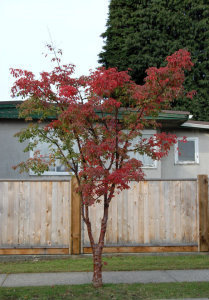
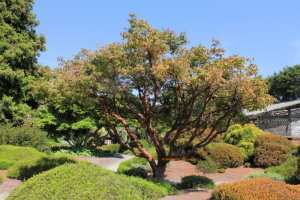
Perfect Size: Slow-growing to 18–20 feet (ignore internet claims of 50 feet—that's 300 years in perfection). Non-aggressive roots—safe near septic, walls, sidewalks. Fits almost any yard.
Adaptable: Tolerates wide soil range, full sun to part shade. Trifoliate leaves are dark green until fall, then turn brilliant reds and oranges.
Pest/Disease Free: No significant issues.
Youthful Charm: "Teenage" trees have lanky, uneven growth—but that bark forgives and even enhances the awkward phase.
Native to central China, introduced in 1901 by Ernest Wilson. Grows well across most U.S.—I've seen beauties in Atlanta (deeper south may be too hot); the oldest, finest U.S. specimen grows at Boston's Arnold Arboretum.
Why isn't it as common as red or sugar maple? Propagation difficulty. Seeds are rarely viable; viable seeds take two years to germinate. Many nurserymen give up. That's why it remains a connoisseur's tree.
For those asking today: Acer griseum is my favorite tree.
Special thanks to members 'growin' and 'Kell' for their Acer griseum images.
Large Maple Borer Infestation: Systemic Insecticide Attempt
Don't Top a Maple to Control Height
Transplanting 'Seiryu' Japanese Maple: Fall vs. Spring, Root Ball Size, and DIY Limits
Hollow Maple Near House: Hazard Assessment Needed
The Catalpa Tree: Messy Magnificence and a Woodcarver's Dream
The Family Tree: Choosing and Caring for a Christmas Tree
Righting a Leaning Maple: Proper Technique for Tree Stabilization
The Avocado Tree Secret: Gypsum and Whitewash for Thriving Trees
The Complete Bonsai: Mastering Symmetry, Balance, and Proportion
Cleveland Pear Tree (Pyrus calleryana 'Cleveland Select'): Fast-Growing Ornamental Shade Tree
The Real Cost of Tree Removal: What Homeowners Should Budget For
Kousa Dogwood (Cornus kousa): Four-Season Star for Small Landscapes
Virginia Pine (Pinus virginiana): From "Weed Tree" to Christmas & Timber Star
Copyright © www.100flowers.win Botanic Garden All Rights Reserved