


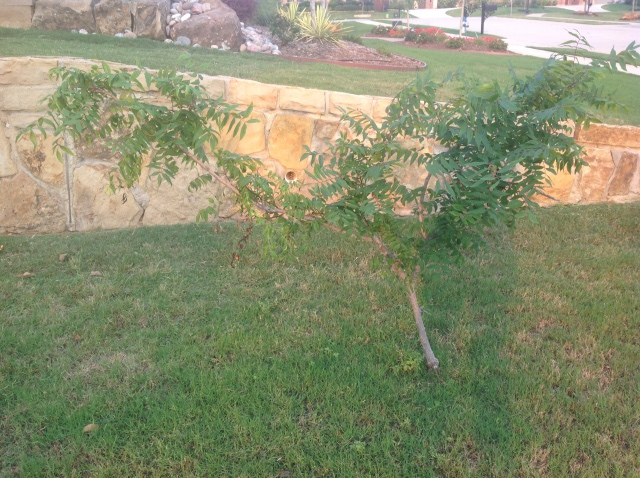
Planting a Chinese pistache (Pistacia chinensis) should reward you with a tough, drought‑tolerant shade tree that eventually reaches 25–35 feet. But what if, after nearly five years, yours barely tops the fence while a neighbor’s tree—planted from the same stock—soars to 12–15 feet? Lori, a gardener in North Texas, faced exactly that puzzle.
When Lori sent photos and details, the expert first ruled out obvious environmental differences: both trees sit in full sun, both have decent drainage, and both are in the same region. The critical variable? Time in the ground. Lori’s mother had planted her tree two to three years earlier. In the first four to five years, Chinese pistaches grow slowly, often appearing “lanky” or stagnant. Once past that establishment phase, they can put on three feet per year.
Lori’s follow‑up revealed a key difference: her husband planted their tree without amending the heavy clay soil or digging a sufficiently wide hole. Her mother’s tree, by contrast, went into a more established neighborhood with richer soil. Lori also described transplanting two container‑grown seedlings (a Chinese pistache and a pecan) from her grandfather’s property. Those had become root‑bound; she dug wide holes, backfilled with a quality tree‑and‑shrub mix blended with native clay, and staked the tall, spindly trunks.
With patience, proper soil management, and targeted feeding, Lori’s Chinese pistache should eventually catch up. The species is an excellent choice for North Texas, and the current slow growth is typical for its juvenile phase.
Diagnosing Thinning Canopy in Chinese Pistache: Drought Stress vs. Disease
Chinese Pistache Sap Exudation: Storm Damage Connection and Management
Chinese Pistache Lichen Growth: Symptom of Decline, Not Cause
Chinese Pistache Bark Flaking and White Spots: Age-Related Flaking, Lichens Likely
Chinese Pistache Broken Branch: To Mend or Remove?
Chinese Pistache Sudden Decline: Water Stress or Hidden Damage?
Chinese Pistache Structural Pruning: Early Training Prevents Splitting
Chinese Pistache Hail Damage: Assessment and Monitoring
Repairing a Broken Branch on Chinese Pistache Tree
Fruitless Mulberry Planted in Summer Heat: Water, Don't Fertilize
Diagnosing Stunted Annuals: Root Space, Fertilizer, and Watering Analysis
Great Design Plant: Chinese Pistache for Spectacular Fall Color
Chinese Pistache Planted Too Deep: Diagnosis and Remediation
Copyright © www.100flowers.win Botanic Garden All Rights Reserved