


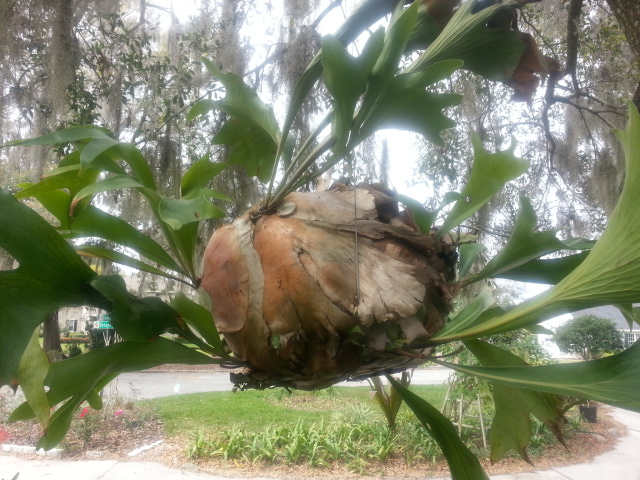
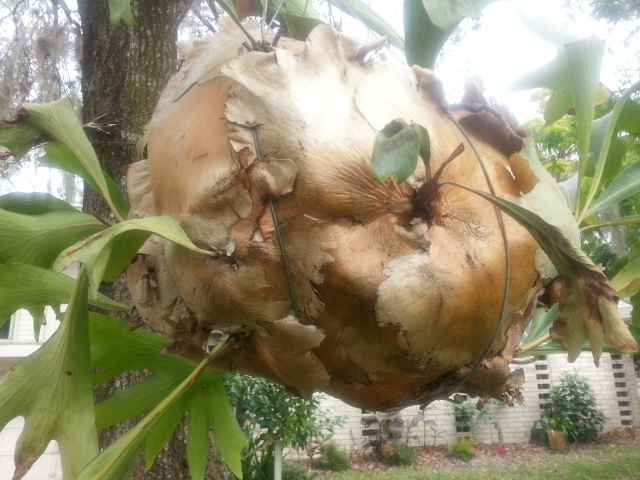
A staghorn fern relocated to a front-yard tree had declined steadily over a year, while a nearby specimen thrived. The plant received only rain and a weekly sprinkler that likely didn't reach the top of the root ball.
The fern isn't diseased—it's root-bound and nutrient-starved. As a free-hanging specimen matures, it eventually exhausts the organic matter in its root ball and can no longer sustain itself.
It's time to take divisions from the parent plant and remount them on fresh media (sphagnum moss, wood slab, or basket). This rejuvenates the plant and creates new specimens. Numerous online tutorials demonstrate the process, and the expert offered further guidance if needed.
Deodar Cedar Decline: Pest Identification and Diagnostic Resources
Rescuing a Sick Phalaenopsis: Repotting from Soggy Roots
Phalaenopsis Spike Browning: Genetics, Not Neglect
Reviving a Newly Bought, Pest-Ridden Rose Bush
Miniature Rose Crashes After Mint Introduction: Spider Mites and Indoor Decline
Bringing a Dormant Staghorn Sundew Indoors
Saving a Withered Nepenthes ampullaria: Heat, Humidity, and Root Health
Venus Flytrap Deformed Growth: Flower Stalk Aftermath + Possible Mites/Mealybugs
Sudden Decline of a 40-Year-Old Ti Plant (Cordyline)
Reviving a Yucca with Hunched, Brown-Spotted New Growth
Staghorn Fern Damaged by Scrubbing: Will It Survive?
Identifying a Hanging Cactus-Like Plant with Falling Branches
Copyright © www.100flowers.win Botanic Garden All Rights Reserved