


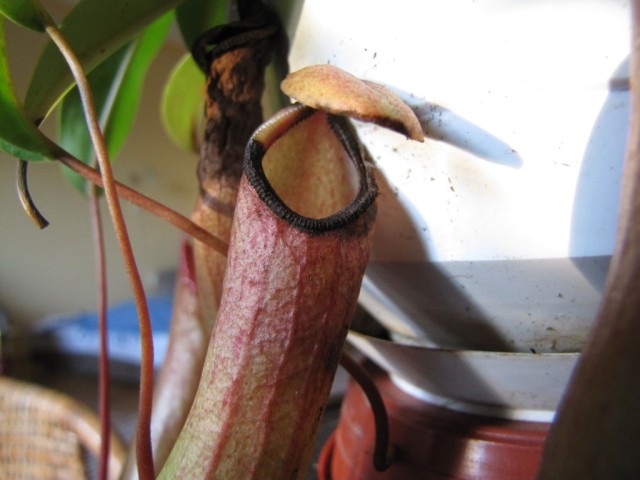
Many Nepenthes growers encounter black discoloration on the peristome and lid of their pitchers, often causing concern. A grower in Hungary noticed tiny black spots on their Nepenthes ventricosa that eventually covered the entire peristome and lid, especially after a cool, wet period outdoors.
The blackening is typically a harmless mold feeding on the abundant nectar secreted by the pitcher's peristome. This is a common, cosmetic issue rather than a sign of disease or normal pitcher dieback (which usually appears brown and dries from the top down). High humidity and cool, damp conditions encourage mold growth on the sugary secretions.
No. The mold does not penetrate plant tissue or affect the pitcher's function. It's purely aesthetic. The pitcher continues to trap insects normally.
Black mold on peristomes is a normal occurrence in humid conditions. Focus on providing good air circulation and avoid prolonged leaf wetness to minimize recurrence. For detailed fungicide guidance, refer to reputable carnivorous plant resources.
Is a Venus Flytrap a Fungus or a Plant?
How to Eliminate Fungus Gnats and Save Your Peace Lily from Root Rot
Reviving a Struggling Black Aralia: Expert Care Tips
Fungus Gnats on Corn Plant (Massangeana): The Overwatering Connection
Treating Tomato Fungus Organically
Treating Powdery Mildew on Potatoes
The Enigmatic Black Orchid: Biology, Diversity, and Conservation
African Violet Fungus: Botrytis from Wet Leaves
Hardy Plant of the Month Club: Winter Care for Zone 6
Is Sundew 'Dew' Harmful to Humans?
Nepenthes Pitchers Turning Black: Focus on Leaves, Increase Light
Venus Flytrap Leaf Burn vs. Fungus: Diagnosis and Care
Overcoming "Black Thumb" Syndrome: A Beginner's Guide to Gardening Success
Black Haw (Viburnum prunifolium): A Versatile Native Tree for Small Spaces
Copyright © www.100flowers.win Botanic Garden All Rights Reserved