


A Puerto Rico grower's D. madagascariensis leans sideways; a neighboring D. intermedia is also pale. Both get morning sun and indirect light the rest of the day.
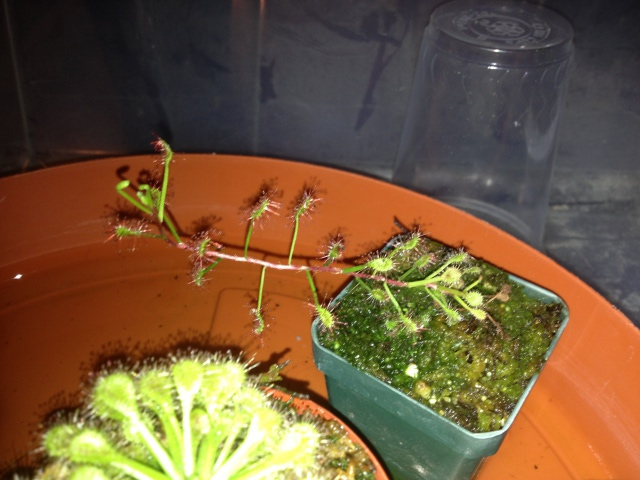
D. madagascariensis
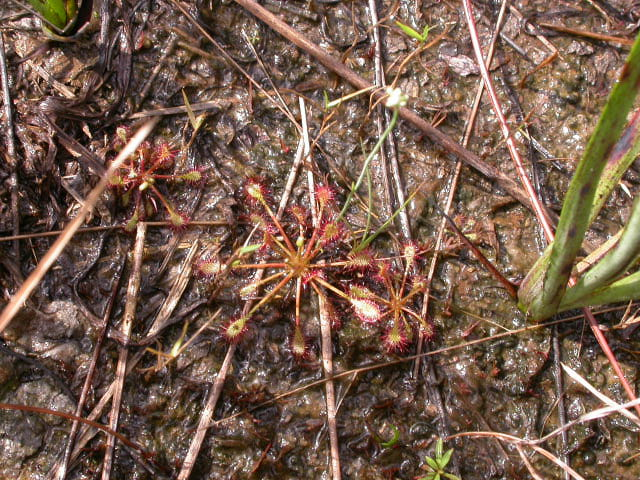
D. intermedia in habitat (NC, August)
Jeff Dallas: Etiolation (weak, elongated growth) results from insufficient light. In nature, these plants receive full sun most of the day. Tentacles should be dark red. Stake the D. madagascariensis stem temporarily; increase light exposure for stronger growth.
Temperate origin doesn't mean cool summers—winters are cold. The photo shows D. intermedia thriving in 90°F full sun in North Carolina. Active growth (no hibernacula) means it wants full sun now.
Diagnosing Pitcher Damage on a Nepenthes: Sunburn vs. Environmental Stress
Enhancing Pink Color in Pinguicula esseriana: More Sun
Black Spot on Nepenthes New Shoot: Cosmetic Damage, Not a Health Crisis
Why Sarracenia purpurea Hoods Vary: Normal Variation, Not a Problem
Growing Nepenthes sanguinea Outdoors During Rainy Season in the Philippines
Cyclamen: The Winter-Blooming Superstar
Coprosma: Glossy Foliage for Full Sun to Partial Sun, Low Water
Growing Sarracenia 'Judith Hindle' in a Shady Yard: Artificial Light Solutions
Nepenthes aristolochioides Culture: Ultra-Highlander Requirements
Terrarium Lessons: Lighting, Soil, and Plant Selection
Nepenthes kuchingensis × viking: Lowland Hybrid Care Indoors
Using 75% Shade Cloth for Drosera adelae Outdoors & Heliamphora Difficulty Clarified
Venus Flytrap Traps Turning Black at Soil Contact: It's a Light Problem
Moving Nepenthes Between Windows for Better Light: East to South Transition Benefits
Copyright © www.100flowers.win Botanic Garden All Rights Reserved