


A new grower in Scottsdale, Arizona purchased two Dionaea muscipula (Venus flytraps) and two Sarracenia from a nursery. The plants arrived in humidity domes, so they were repotted into terra-cotta pots using a mix of coarse sand and "green moss" and watered with reverse osmosis (RO) water. After placing them in late afternoon sun for about an hour, the plants—especially the Sarracenia—became extremely wilty.
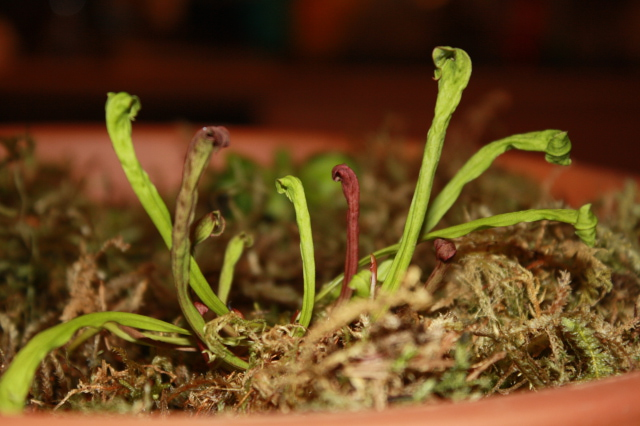
Wilted Sarracenia
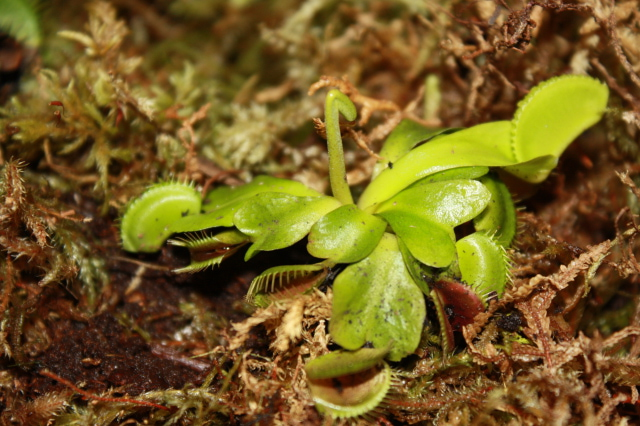
Wilted Venus flytrap
Jeff Dallas (Sarracenia Northwest) explains that after being packed in small cubes, the leaves are weak from excess humidity and insufficient light. The best course of action is to cut off the wilted leaves. This reduces transpiration and allows the plant to recover, producing new growth from the rhizome that is adapted to lower humidity and normal sun conditions. For the Venus flytrap, remove any leaves that begin to wilt as well.
For detailed care instructions, visit the Sarracenia Northwest care page. Both Sarracenia and Venus flytraps are cold-hardy. Consider the Volume #1 DVD for a full course on growing North American carnivorous plants.
Fungus Gnats in Orchids: Repotting to Eliminate
Managing Live Sphagnum Top Dressing for Sarracenia and Venus Flytraps During Dormancy
Managing Algae and Moss in Outdoor Bog Gardens
Sudden Wilting in Ivy and Radermachera: Root Rot Is the Prime Suspect
Using Wild Moss for Indoor Plants: Safety and Alternatives
Managing Moss in a Shady, Cool-Climate Lawn
African Violet Decline from the Base: Diagnosing Root Rot or Fungal Disease
Incandescent “Plant Light” Causes Drosera/ Dionaea Etiolation; Switch to CFL
Mold Outbreak in Nepenthes Terrarium: Quarantine, Repot, Dry Out
Danger: Miracle-Gro Peat and Perlite Kill Carnivorous Plants
Strawberry Plant White Mold: Self-Watering Pot Problem
Small-Plant Gardens and Moss Gardens: Miniature Indoor Displays
Copyright © www.100flowers.win Botanic Garden All Rights Reserved