


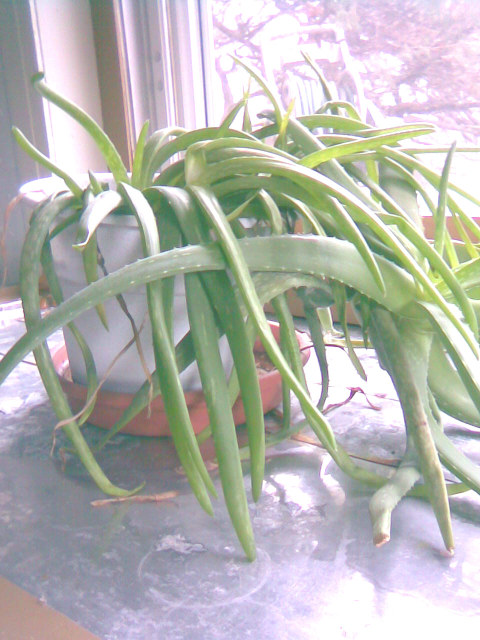
This aloe vera has multiple issues: it's been in the same soil too long, the pot is too small, and the long, thin leaves indicate etiolation—stretching toward insufficient light from an east-facing window in Chicago.
Use a well-draining mix: half perlite, half potting soil works well. Stake the mother plant until re-established. Water sparingly until rooted, then only when soil is completely dry.
Move to a sunnier window if possible. Rotate the pot regularly to prevent one-sided leaning. More light yields compact, manageable growth, though pups will continue forming regardless.
The mother plant's crooked, top-heavy trunk won't stand alone. Options:
Individual aloe leaves root poorly—don't bother. Discarded leaves can be used for aloe gel recipes or homeopathic purposes. Aloe vera is remarkably forgiving; with management, it will thrive.
Yellow-Brown Fungus on Aloe Vera After Heavy Rain: Slime Mold or Pathogen?
Re-rooting a Rootless Aloe Vera
Foul-Smelling Yellow Aloe Gel: Not Normal – Identify Plant
Aloe Vera Root Rot Rescue: Stem Cutting Propagation
Aloe Vera Brown Spots: Sun Stress or Root Rot Risk?
Aloe Vera Offset Crowding & Brown Spots: Natural, Not Disease
Indoor Aloe Vera with Air Conditioning
Identifying Hesperaloe parviflora (Not Aloe)
Aloe Vera Fading Behind Plate Glass: Sunburn Through Glass
Top-Heavy Aloe Vera: Staking, Re-rooting & Leaf Splitting
Aloe Vera Flowering: Rare Indoors, Normal in Nature
Aloe Vera Cold Tolerance and Outdoor Winter Protection in Utah
Copyright © www.100flowers.win Botanic Garden All Rights Reserved