


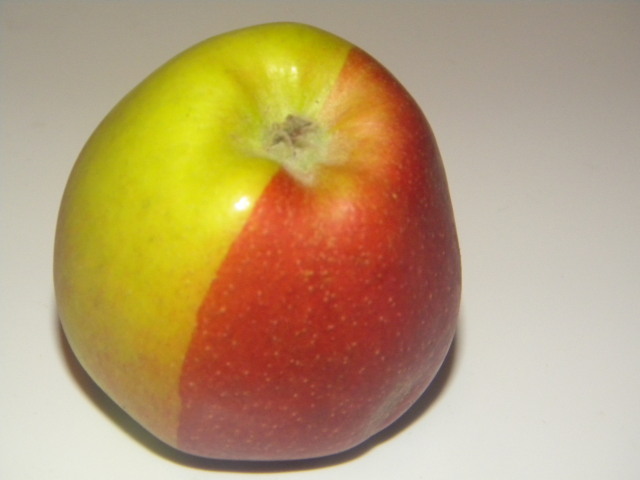
A quality assurance supervisor in fruit distribution finds Gala apples split perfectly down the middle—one half typical red, the other green. She seeks the cause for a presentation on apple disorders.
Apple skin color is controlled by anthocyanin pigments, regulated by the MYB transcription factor gene (discovered 2007). Light exposure normally triggers red coloration; shaded areas stay green. However, a sharp, straight-line division suggests a somatic mutation early in fruit development.
This is a physiological disorder (genetic chimera), not a disease, nutrient deficiency, or pest injury. It is rare but documented in apples and other fruits.
Use this as a striking example of how gene regulation and somatic mutation create visible fruit patterns—great for illustrating plant genetics in horticulture.
Apple Tree Decline: Fewer Blossoms, Wilted Leaves
Crab Apple White Fluffy Growth: Scale or Powdery Mildew?
Cedar-Apple Rust: Life Cycle, Apple Impact, and Fungicide Control
Reviving a Wild Apple Tree: Pruning and Care Guide
Growing Apples: A Checklist for Success
How to Grow Apple Trees: Planting, Pruning, and Harvest Guide
Red Apple Ground Cover Replacement for Shady Hillside
Rain-Induced Decline in Red Apple Ice Plant and Recovery Steps
Red Apple Ice Plant Collapse: Water Management and Recovery
Apple Variety Guide: Gale Gala, Oregon Spur, Early Red, Super Chief, Red Chief
Brown Spots Inside Green Apples: Disease or Physiological Issue?
Espalier Apple Pruning: Leader Removal Unlikely to Kill Tree
Copyright © www.100flowers.win Botanic Garden All Rights Reserved