


Alfredo's seed-grown gloxinia, blooming for the first time, showed lower stem browning, thinning, and apparent rot, causing top-heavy imbalance.
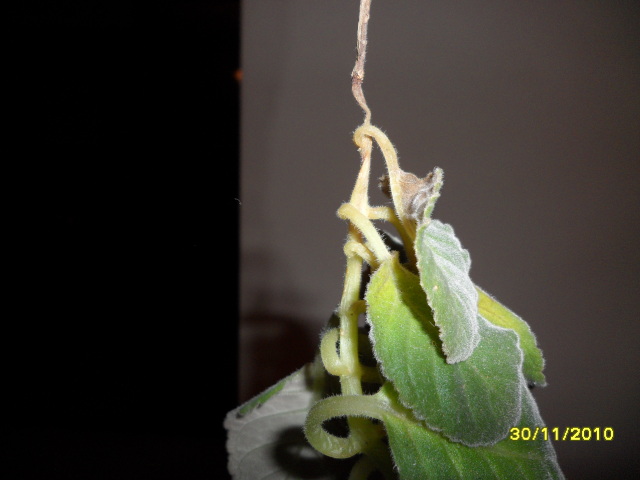
Melissa explained gloxinias typically die back after heavy blooming, signaling a required rest period (6-9 weeks dry dormancy, then repot in fresh soil, bright indirect light, resume watering).
Since this is the plant's first bloom, Melissa adjusted strategy:
First-bloom gloxinias may not follow typical dormancy timing. The staged approach balances preserving the historic first bloom with preventing fatal rot. The snail/slug check is a commonly overlooked but devastating pest.
First Orchid Care: Normal Bloom Aging and the Critical Annual Repotting Rule
Oncidium Leaf Tip Browning: Salt Buildup, Fertilizer, and Light Fixes
Gloxinia Stem Weakness: Pinch Blooms to Build Strength
Brown, Wilted Leaf Edges on African Violet: Diagnosing the Cause
Nepenthes Crown Rot? And Sarracenia Wind Damage
Finding the Friendship Plant (Kalanchoe pinnata)
Repotting a 15-Year-Old Sentimental Bulb Plant: Assessment and Care
Identifying a Variegated Yucca and Ornamental Fig on St. Croix
Identifying and Eradicating Crepe Myrtle Suckers in a Planter
Help Identifying Four Houseplants and Their Toxicity to Cats
Caring for a Post‑Bloom Oriental Lily: Indoors or Out?
Gloxinia (Sinningia speciosa) Care: Velvety Bells for Indoor Beauty
Copyright © www.100flowers.win Botanic Garden All Rights Reserved