


A Georgia homeowner noticed their two-year-old crape myrtle was struggling to leaf out in spring after a February pruning. Thread-like growths emerged from the bark, leaving tiny holes when brushed away, and a thin layer of moss had begun to coat the trunk. Initial insecticide sprays proved ineffective.
Entomologist Jack DeAngelis initially suspected a fungal issue but revised the diagnosis after reviewing a photo. The "threads" were actually compacted sawdust (frass) being expelled by wood-boring beetle larvae tunneling beneath the bark. The moss growth signaled the tree's vigor was already compromised.
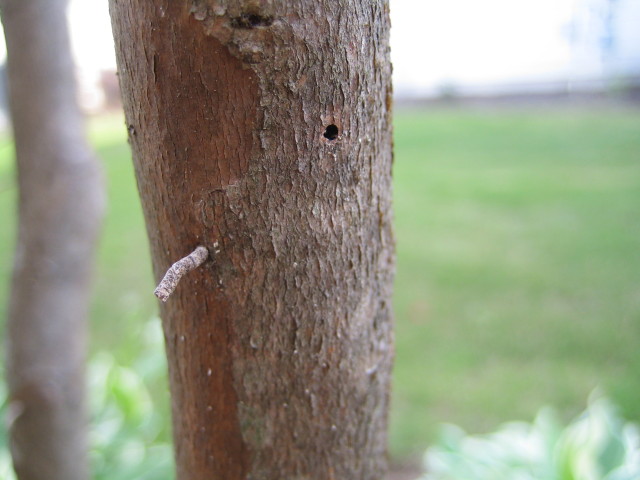
Wood-boring beetles lay eggs in bark crevices. Upon hatching, larvae bore into the wood, creating galleries that weaken the tree structurally and disrupt nutrient flow. The expelled frass often resembles sawdust but can clump into thread-like strands in humid conditions.
If the infestation is extensive, the tree is large, or structural stability is a concern, consult a certified arborist. They can assess whether the tree can be saved or if removal is safer.
Muskogee Crape Myrtle: Caterpillars & Transplant Stress
Crepe Myrtle Seedlings: Expect Variation from Hybrids
Crape Myrtle Training: From Bush to Tree Form on Long Island
Saving a Potted Crape Myrtle from Wilting and Yellowing
Growing Lagerstroemia (Crape Myrtle) – Southern Favorite
Pecos Crape Myrtle: Clear Pink Flower Trusses with Peeling Bark
Pecos Crape Myrtle: Clear Pink Flowers, Peeling Bark, Mildew Resistant
Crape Myrtle Limb Dieback: Environmental Stress, Not Disease
Whitefly Infestation on Crepe Myrtle: Identification and Control
Crape Myrtle Sooty Mold: Treat the Insects, Not the Fungus
Crape Myrtle Leaf Spots with Holes: Cercospora Leaf Spot
Crape Myrtle Bark Fungus/Lichen: Cosmetic, Not Harmful
Crape Myrtle Brown Leaves: Heat and Drought Stress
Transplanting Crape Myrtle Seedlings: Timing and Techniques for Success
Copyright © www.100flowers.win Botanic Garden All Rights Reserved