


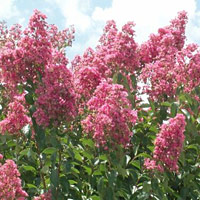
Crape myrtle is a fast-growing, small to medium deciduous tree with large, colorful flowers from midsummer to fall. Attractive fall foliage and textured bark provide winter interest. Also called southern lilac.
Best in warm summer areas. Colors: pink, red, purple, white. Most 15–25 feet tall/wide; shorter varieties 3–5 feet. Dwarfs for containers.
Full sun, well-drained soil.
Spring: compost layer to dripline + 2-inch mulch (keep away from trunk). Water if rainfall <1 inch/week. Flowers on new wood—prune weak, spindly growth in spring for better flowering. Remove dead/diseased/broken branches anytime.
Non-Blooming Crape Myrtle: Sunlight and Fertilization
Spider Mites on Crape Myrtle: Sticky Residue, Curling Leaves, and Webbing
Troubleshooting Leaf Curl and Scorch on Young Crape Myrtles
Crape Myrtle 'Dynamite': The Show-Stopping Southern Tree for Year-Round Color
Arapaho Crape Myrtle: True Red Blooms, Mildew Resistant, Beautiful Bark
Cheyenne Crape Myrtle: Vivid Red Blooms, Brilliant Fall Color, Mildew Resistant
Crape Myrtle Establishment: Overwatering Correction and Fungal Prevention
Crape Myrtle Bumpy Trunk, No Flowers: Gall, Planting Depth, or Shade
Crape Myrtle Dropping New Limbs: "Crape Murder" Aftermath
Crepe Myrtle Bark Shedding and Biennial Blooming: Normal vs. Nutrient Needs
Gray Sheath on Rose of Sharon and Crape Myrtle: Lichens, Not the Killer
Identifying and Treating Wood-Boring Beetles on Crape Myrtle
Crepe Myrtle Moss and Weevil Larvae: Spray Orthene, Remove Moss
Copyright © www.100flowers.win Botanic Garden All Rights Reserved