


Found in Colorado’s subalpine zones, false hellebore (Veratrum tenuipetalum) resembles true skunk cabbage (Symplocarpus foetidus East, Lysichiton americanus West) but is highly toxic. All parts contain alkaloids that cause severe vomiting, low blood pressure, and heart rhythm issues if ingested.
Do not touch or ingest. Teach children to avoid. Livestock poisoning occurs when other forage is scarce. Admire from a distance.
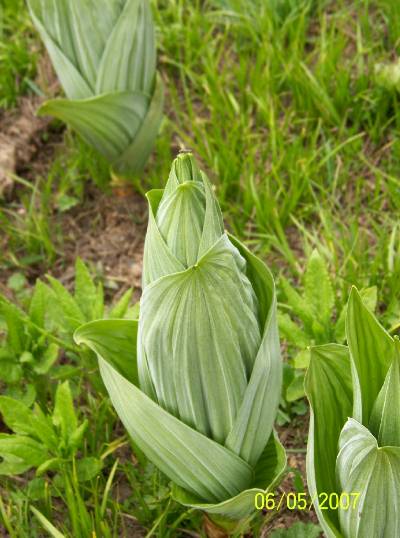
False hellebore in bloom—beautiful but deadly.
Golden Larch vs. Common Larch: Clearing Up the Confusion
Society Garlic: Seed Collection and Deer Resistance
Lanceleaf Greenbriar: Thornless Vine with Edible Shoots
Barred Owl: The "Who Cooks for You?" Hunter
Bloody Dock (Rumex sanguineus): Ornamental or Invasive?
Creasy Greens: The Spring Tonic Wild Cress
Turtlehead (Chelone lyonii): Native Perennial for Damp Shade
Possum Grape (Ampelopsis cordata): Colorful Vine, Weedy Habit
Longleaf Pine: From Grass Stage to Bottlebrush
Rosinweed (Silphium compositum): Taprooted Native Perennial
Identifying Black Cherry Trees in the Landscape
Jatropha: Ornamental Shrub with Biodiesel Potential
Twining Snoutbean: Native Legume, Not a Weed
Copperhead Snake Identification: Venomous—Observe, Don't Touch
Copyright © www.100flowers.win Botanic Garden All Rights Reserved