


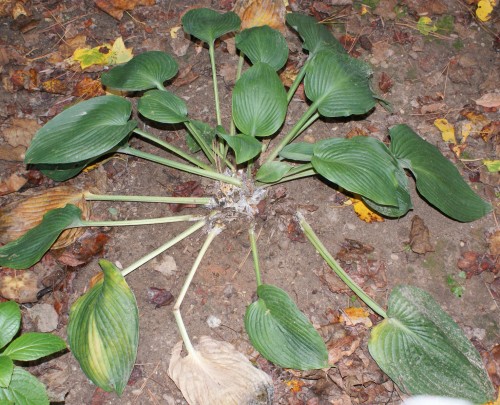
Those beige, mustard-seed-sized spheres and white cottony webbing at the base of your hosta? Textbook Southern blight (crown rot), caused by the fungus Sclerotium rolfsii. The "beads" are sclerotia—survival structures that persist in soil for years.
Strangely, you water sparingly. So how did a moisture-loving fungus take hold? The answer came in your follow-up: you used a strong, direct stream of water when hand-watering. That force bruised the tender petioles, creating entry points for the pathogen. A gentle shower setting would have prevented it.
Remove and destroy the infected plant—don't compost it. Solarize the soil or replace it in that spot. Avoid wounding stems when watering. The good news: your other 12 divisions from the same parent plant are unaffected, and the disease doesn't spread rapidly without mechanical injury.
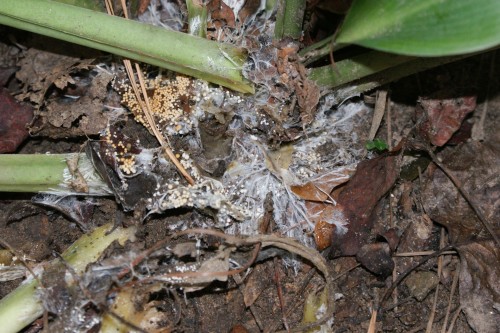
Hosta stem rot with sclerotia
Cottony mycelium at crown
Designing Hosta Gardens: Shade Elegance with Endless Variety
Hosta 'Empress Wu' – Giant Hosta with Massive Leaves
Hosta 'Halcyon' (Hosta 'Halcyon'): Blue Hostas That Hold Color All Season
Hosta: The Shade Garden Favorite
How to Safely Apply Compost to Your Hosta Bed
Fascinating Fasciation: When Coneflowers Develop Flattened Stems and Fused Blooms
Reviving African Violets with Exposed Stems
African Violet “Neck”: Repot Every Six Months to Cover Bare Stem
Tomato Stem Roots and Yellow Leaves: Adventitious Roots and Disease
Fasciation: Flattened Stems in Lilies and Fantail Willow
Hosta Virus X: Mottled Leaves Mean Incurable Infection
Protecting Hostas from Deer: Fencing and Repellent Strategies
Copyright © www.100flowers.win Botanic Garden All Rights Reserved