


That yellow-orange ooze appearing on fresh pruning cuts isn't disease—it's muscadine sap being colonized by naturally occurring yeasts and fungi.
Muscadine sap is rich in sugars—ideal food for yeasts. Certain species, particularly Cryptococcus macerans, store energy in carotene-filled sacs within their cells, creating the distinctive orange coloration.
No. This is a superficial colonization of the sap, not an infection of the vine tissue. The bleeding will stop naturally as the pruning wounds callus over.
If ooze persists for weeks, has a foul odor, or is accompanied by cane dieback, consult a local extension agent—these could indicate bacterial canker or other issues.
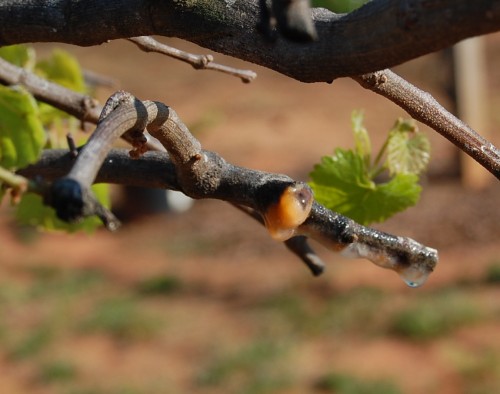
Orange yeast colonization on fresh muscadine pruning wound
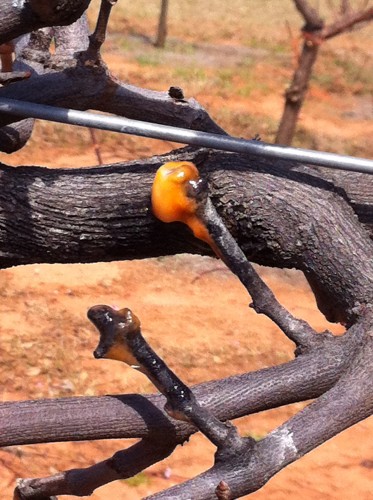
Detail showing yeast-colonized sap
Pruning an Overgrown Muscadine Arbor: Two Approaches
Citrus Spider Mites: The Kid-Friendly Control Project
Don’t Transplant Wild Muscadines—Buy Named Varieties
Growing Citrus Indoors: Why Seed-Grown Oranges Rarely Fruit
How Seedless Clementines Reproduce: Hybrid Origins and Commercial Propagation
Young Orange Tree with Dead Limbs and Sap: Scale or Aphids Likely
Indoor Orange Tree White Clusters: Mealybugs or Scale Treated with Neem Oil
Sour Orange Tree: Rootstock Takeover and Grafting Options
Kwanzan Cherry Oozing Sap: Bacterial Canker or Mechanical Injury?
Navel Orange Seed Discovery: Mutation, Viability, and Expectations
Dwarf Orange Tree with Strange Thorny Growth: Rootstock Sucker
Copyright © www.100flowers.win Botanic Garden All Rights Reserved