


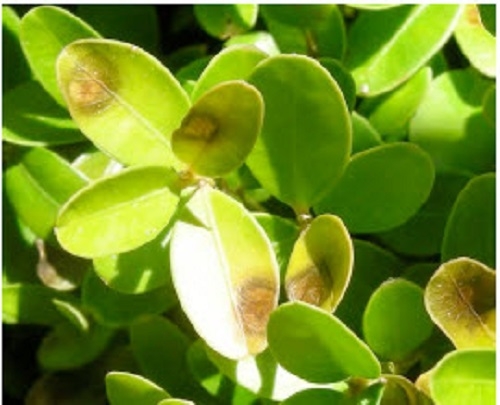
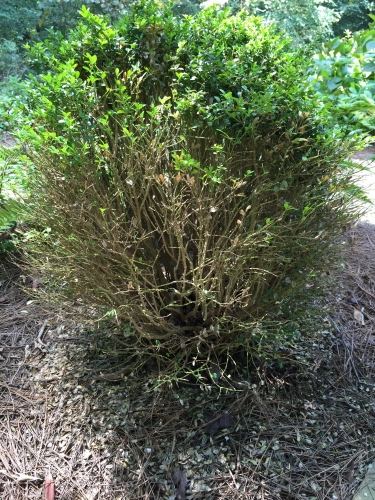
Boxwood blight (Calonectria pseudonaviculata) is a serious fungal disease spreading in Georgia, affecting American and English boxwoods. Korean boxwood shows some resistance but can be an asymptomatic carrier.
Volutella blight and Macrophoma blight cause similar symptoms but require different management. Only a lab test can confirm boxwood blight. Submit samples through your local UGA Extension office (call 1-800-ASKUGA1). Homeowner samples cost $10; commercial samples (via landscapers) are free.
The disease spreads rapidly in cool, wet fall and spring weather. Hot summer temperatures slow it, but it returns aggressively in autumn.
Control with fungicides is extremely difficult and not recommended for homeowners. Prevention through sanitation, resistant cultivars, and early detection is the best strategy.
Boxwood Decline: Soil Quality, Not Iron Deficiency
Boxwood Spring Yellowing: Cold Damage or Decline? Need Photo.
Identifying and Controlling Boxwood Leaf Miner
Boxwood Death on One Side: Fix Drainage, Amend Soil, Use Cottonseed Meal
Japanese Boxwood Dieback: Causes and Cultural Solutions
Hard Pruning Overgrown Boxwoods: A Two-Year Strategy for Recovery
Lilac Bacterial Blight: Prune and Spray Copper
Scale Insects on Boxwood: Identification and Organic Control
Hard Pruning a 30-Year Boxwood Hedge: Timing and Risks
Copper Fungicide for Spruce Blight: Timing & Limits
Renovating Overgrown Boxwood Shrubs: Gradual Pruning
Controlling Nutsedge in Boxwood Hedges and Reviving Struggling Plants
Copyright © www.100flowers.win Botanic Garden All Rights Reserved