


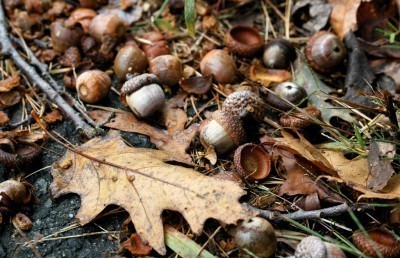
Oaks drop acorns annually—squirrels love them, homeowners curse the seedlings. Good news: acorns compost well and add valuable protein/brown carbon. The secret: shell preparation.
Compost needs greens (moist: grass, kitchen waste), browns (dry: branches, paper, acorns), soil, water. Acorns balance green-heavy piles—proper brown:green ratio is vital.
Tough shells take years naturally. Accelerate: spread on driveway. Small amounts: hammer-crack. Large amounts: drive over repeatedly until shells crack, meat mashes. Scrape into pile.
Layer: good green base → mashed acorns (even layer) → dry browns (leaves, shredded paper) ~2 inches → 2 inches soil → water. Turn monthly for aeration/heat.
Composting Bird Feathers: A Free, High-Nitrogen Boost for Your Pile
Composting Spent Hops: Great for Soil, But Toxic to Dogs
Can You Compost Sweetgum Balls? Only in a Hot, Patient Pile
Composting Onions: Yes, But Chop Them and Bury Deep
Composting Fish Waste: Turn Scraps into Nutrient-Rich Garden Gold
Make a Compost Bin from a Trash Can: Cheap, Fast, Effective
Composting Dryer Lint: A Simple Carbon Boost for Your Pile
Composting Bird Feathers: A Nitrogen-Rich Amendment for Your Pile
Composting Spent Hops: Benefits and Critical Pet Safety Warning
Composting Sweetgum Balls: Challenges and Creative Uses
Composting Onions: Managing Odor and Sprouting in Your Pile
Composting Fish Waste: How to Turn Fish Scraps into Garden Gold
Copyright © www.100flowers.win Botanic Garden All Rights Reserved