


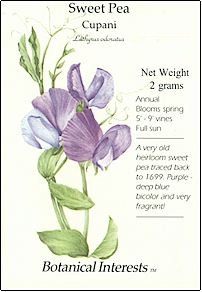
Sweet Pea Cupani
(Lathyrus odoratus)
The first sweet pea in England, Cupani arrived in the late 1600s from Father Franciscus Cupani, a monk, to Dr. Uvedale. A spring/summer bloomer that continues flowering as temperatures increase—ideal for areas without long, cool springs. A fragrant piece of garden history.
Flower Type: Annual
Bloom Time: Spring
Height: 5' to 9' Vines
Exposure: Full Sun
When to Sow Outside: Cold climates: as early as soil can be worked (St. Patrick's Day or earlier). Warm climates: October–January for spring blooms.
When to Sow Inside: 4–6 weeks before planting outside.
Seed Depth: 1"
Seed Spacing: 2"
Days to Emerge: 10–15
Thinning: When 3" tall, thin to 6" apart
Aquarium Gravel as Terrarium Drainage Layer: Yes, It Works
Growing Sweet Peas in Zone 4/5: Deep Rich Soil, Daily Picking & Feeding
Controlling Earwigs on Sweet Corn with Insecticidal Soap
To Pinch or Not to Pinch Pepper Flowers: Natural Approach
How to Care for Sweet Pea Plants for Maximum Blooms
Sweet Pea Shrub: Year-Round Blooms for Sun or Light Shade
Sweet Pea (Lathyrus odoratus): Fragrant Cool-Season Climbers
Sugar vs. Salt for Weed Control: How They Affect Soil Microbes and Plants
Why Are My Onions Too Hot? Choosing Sweet Varieties
Sweet Peas: Fragrant Climbers for Vertical Garden Charm
Growing Sweet Corn: The Taste of Summer Fresh from the Stalk
Sweet Pea Shrub 'Petite Butterflies': Compact Magenta Blooms for Containers
Growing Sweet Peppers: A Quick Guide
Butterfly Pea (Clitoria mariana): A Native Vine for Dry Shade
Copyright © www.100flowers.win Botanic Garden All Rights Reserved