


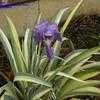
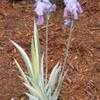
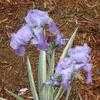
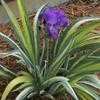
Among the most prized foliage plants in the perennial garden, Iris pallida 'Variegata' (also known as Dalmatian Iris, Orris Root, or Zebra Iris) offers stunning cream-and-green striped leaves year-round, complemented by fragrant lavender-blue flowers in late spring. This ancient cultivar has graced gardens for centuries.
Iris pallida, native to the Dalmatian coast (Croatia), has been cultivated since antiquity for its rhizomes—source of orris root, a prized fixative in perfumery and flavoring. The variegated form has been known for centuries and is valued primarily for its striking foliage: sword-like leaves boldly striped lengthwise in cream and green, creating a vertical accent that brightens shady corners and provides season-long structure.
Plants form slowly spreading clumps 24–30 inches tall. In late spring, branched stems bear fragrant, pale lavender-blue flowers with the classic iris form (but beardless—this is a beardless species). The blooms are lovely, but the foliage is the star, remaining attractive from early spring until hard frost. Unlike bearded irises, I. pallida tolerates more shade and moisture.
Grow in part shade to full sun (more shade enhances variegation contrast). Prefers rich, moist but well-drained soil. More tolerant of heavy clay and moisture than bearded irises. Divide every 4–5 years in late summer. The rhizomes are thick and fibrous—plant horizontally just below the surface. An essential plant for foliage-focused gardens and historical collections.
Variegated String of Buttons (Crassula perforata 'Variegata')
Variegated Japanese Sedge 'Aurea Variegata' (Carex morrowii 'Aurea Variegata')
Variegated Sweet Flag 'Variegatus' (Acorus calamus): A Fragrant, Striped Wetland Perennial
Variegated Greater Periwinkle 'Variegata': Elegant Groundcover for Shade
Thymus citriodorus 'Variegata': Variegated Lemon Thyme – Citrus Scent and Gold-Splashed Leaves
Variegated Shell Ginger (Alpinia zerumbet 'Variegata'): Striking Foliage for Shade Gardens
Reticulated Iris (Iris reticulata): An Early Spring Bulbous Beauty
Dutch Iris (Iris × hollandica): A Popular Cut Flower Bulb
Siberian Iris (Iris sibirica): Graceful Species for Moist Gardens
Copper Iris (Iris fulva): A Native American Species
Variegated Japanese Angelica Tree (Aralia elata 'Variegata'): Bold Foliage
Pineapple Mint 'Variegata' (Mentha suaveolens 'Variegata'): Ornamental Variegated Herb
Variegated Beach Spider Lily 'Variegata': Striking Foliage and Fragrant Flowers
Copyright © www.100flowers.win Botanic Garden All Rights Reserved