Samanea saman: The Grand Canopy Tree
Known as monkey pod, rain tree, or false powder puff, *Samanea saman* (syn. *Enterolobium saman*, *Pithecellobium saman*) is one of the most iconic trees of the tropics. Its massive, umbrella-shaped canopy—often wider than the tree is tall—provides acres of cooling shade, while its delicate pink powder-puff flowers and curious leaf-folding habit have charmed observers for centuries.
Botanical Profile
- Family: Fabaceae (legume); subfamily Mimosoideae (formerly Mimosaceae).
- Genus: *Samanea* (2–4 species).
- Species: *S. saman*.
- Synonyms: *Enterolobium saman*, *Pithecellobium saman*, *Albizia saman*.
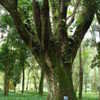
- Habit: Large evergreen (briefly deciduous in dry season), 50–80 ft tall, canopy 100–150 ft wide; massive buttressed trunk.
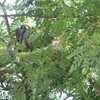
- Leaves: Bipinnately compound, 12–18 in. long; 12–20 pairs of pinnae, each with 20–30 tiny leaflets. **Nyctinastic**: leaflets fold at night and during rain (hence "rain tree").
- Flowers: Pinkish-white stamens in dense heads (2–3 in.), like powder puffs; fragrant; bat-pollinated; bloom intermittently year-round.
- Fruit: Thick, dark brown, curved pods (6–12 in.), indehiscent; sweet, sticky pulp around 15–20 seeds. Eaten by livestock, wildlife.
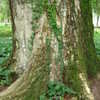
- Bark: Gray, rough, fissured.
Native Range and Global Spread
- Native: Northern South America (Venezuela, Colombia, Panama) to Central America.
- Introduced: 19th century to Caribbean, Hawaii, Southeast Asia, South Asia, Pacific Islands, Africa, Florida.
- Naturalized: Widely; often planted in pastures, parks, roadsides.
Uses and Values
- Shade: **Primary use.** Planted in coffee/cacao plantations, pastures (cattle shade), parks, plazas. Canopy reduces heat stress, improves undergrowth microclimate.
- Timber: Heartwood golden to dark brown, attractive figure; moderately durable. Furniture, carvings, bowls, veneer. "Monkeypod" wood famous in Hawaii.
- Food: Pod pulp edible (sweet, licorice-like); seeds roasted. Flowers → honey.
- Fodder: Leaves and pods high-protein feed for cattle, goats.
- Nitrogen fixation: Rhizobial nodules; enriches soil.
- Medicinal: Traditional uses for bark, leaves, roots (diarrhea, colds, skin).
- Cultural: "Rain tree" name from leaf-folding before rain; landmark trees in many tropical cities.
Growing Requirements
- Climate: True tropical/subtropical; zones 10–12. No frost tolerance. 40–200 inches rainfall.
- Light: Full sun.
- Soil: Adaptable: clay, sand, limestone, poor soils. Tolerates seasonal flooding and drought. pH 5–8.
- Water: Established trees very drought-tolerant (deep roots).
- Propagation: Seed (scarify, soak), cuttings, air layers.
- Growth rate: Fast: 3–5 ft/year.
Management Considerations
- Size: **Enormous canopy**—requires vast space; not for small yards.
- Roots: Aggressive surface roots; lift sidewalks, foundations; plant far from infrastructure.
- Litter: Heavy leaf, flower, pod drop; messy near pools, patios.
- Pests: Generally resistant; occasional caterpillars, borers.
- Invasiveness: Can self-seed in ideal climates; monitor.
Famous Specimens
- "Rain Tree" at Iolani Palace, Honolulu (planted 1880s).
- Massive trees in Singapore Botanic Gardens, Bogor (Indonesia), Peradeniya (Sri Lanka).
- Genip tree (local name) in Caribbean pastures.


