


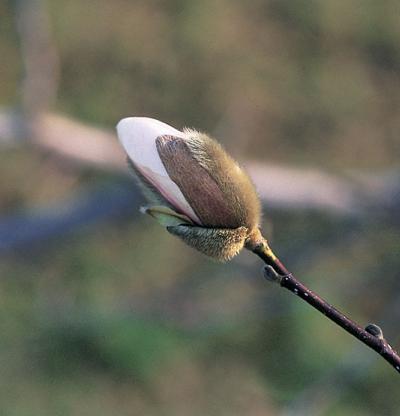
This vigorous, erect tree grows 20–30 feet tall with star-shaped flowers bearing 15 broad white petals blushed with pink. Fragrant blossoms appear before the leaves in early to mid-spring.
Grow in moist, well-drained, preferably acidic to neutral soil in sun or partial shade; magnolias do not tolerate wet feet. Flower buds are susceptible to late frosts; shelter large-leaved species from wind. Prune in late winter or late summer to prevent sap bleeding; prune minimally.
Sow seeds in autumn or stratify. Root softwood cuttings in early summer. Can be layered in early spring, grafted in winter, or propagated by bud in summer.
Bacterial leaf spot, spot anthracnose, canker, dieback, butt rot, powdery mildew, anthracnose, fungal spots, weevils, snails, scale insects, thrips, planthoppers.
Deciduous Magnolia Dormancy: Velvet Buds and Leaf Drop Explained
Galaxy Magnolia: Candy-Scented Reddish-Purple Goblets
Spectrum Magnolia: Vivid Pink Blooms on Broadly Oval Tree
Ashe Magnolia: Giant Fragrant White Flowers with Maroon Centers
Kobus Magnolia: Profuse White-Pink Spring Blooms on Tall Tree
Bigleaf Magnolia: Enormous Leaves and Foot-Wide Fragrant Flowers
Magnolia Decline in Texas Drought: Root/Soil Issue Needing On-Site Diagnosis
Magnolia Scale? Get Accurate ID Before Treating
Magnolia Stress in Galveston: Semi-Evergreen Leaf Drop, High-P Fertilizer for Blooms
Magnolia Seed Propagation: Detailed Protocol for 20-25 Trees
Japanese Magnolia Near Sidewalks: Root Barrier or Transplant
Magnolia Tree Yellowing After Yard Renovation: Root Damage Suspected
Copyright © www.100flowers.win Botanic Garden All Rights Reserved