


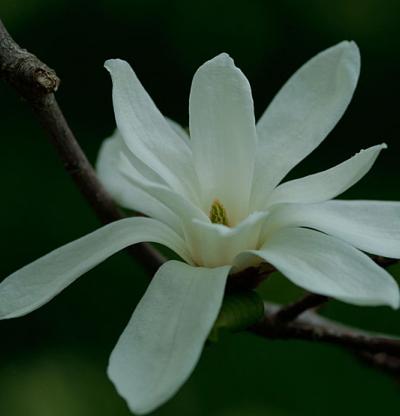
This deciduous tree grows to 40 feet tall and blooms in early spring with a profusion of white-tinged pink goblet to saucer-shaped blossoms 3–4 inches wide. Species can take up to twenty years to bloom from seed.
Grow in moist, well-drained, preferably acidic to neutral soil in sun or partial shade; magnolias do not tolerate wet feet. Flower buds are susceptible to late frosts; shelter large-leaved species from wind. Prune in late winter or late summer to prevent sap bleeding; prune minimally.
Sow seeds in autumn or stratify. Root softwood cuttings in early summer. Can be layered in early spring, grafted in winter, or propagated by bud in summer.
Bacterial leaf spot, spot anthracnose, canker, dieback, butt rot, powdery mildew, anthracnose, fungal spots, weevils, snails, scale insects, thrips, planthoppers.
Magnolia Scale and Sooty Mold: Insecticide Needed Beyond Hand-Picking
Magnolia Trunk Wounds from Trucks: Insect Protection
Dill Bolting in St. Louis Heat: Annual Nature, Fall Replant Option
Why Spring Water Outperformed Tap Water in Your Plant Experiment
Magnolia Trees Damaged by Pool Salt Runoff: Fertilizer & Barrier Strategy
Paperbark Maple (Acer griseum): Four-Season Tree with Peeling Cinnamon Bark
Common Yarrow (Achillea millefolium): Tough Spreading Perennial for Pollinators
Mescal / Parry's Agave (Agave parryi): Compact, Blue-Gray Rosette with Cream Flowers
Alpine Lady's Mantle (Alchemilla alpina): Tiny, Silver-Edged Leaves for Rock Gardens
Growing Broccoli: Tips for a Bountiful Harvest
Magnolia Trees: Southern & Saucer Varieties for Western Gardens
Copyright © www.100flowers.win Botanic Garden All Rights Reserved