


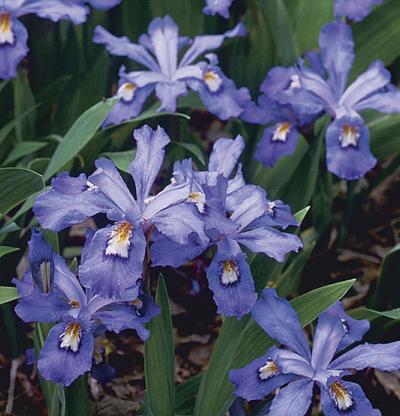
Iris cristata (crested iris) has spectacular but fleeting stemless blooms with blue-lilac petals, each with a white patch and yellow or orange crest on each fall. Blooms in May. Dagger-shaped leaves 5–6 inches tall form an attractive cool green carpet. 'Alba' is a white-flowered variety.
Thrives in shade. Enjoys moist, acid soil, but blooms well even in dry shade.
Divide and replant rhizomes in fresh soil after 2–5 years.
Iris borer, verbena bud moth, whiteflies, iris weevil, thrips, slugs and snails, aphids, nematodes. Bacterial leaf blight and soft rot, crown rot, rhizome rot, leaf spot, rust, viruses, and scorch.
Transplanting Iris Under Oak Trees and Deterring Moles
Reviving Overgrown Lilacs in Pennsylvania: Pruning and Bloom Optimization
Walking Iris (Neomarica): Fragrant Blooms That "Walk" Across the Garden
Tall Bearded Iris (Iris germanica): Violet-Purple Standards with Bronze Edging
Chionodoxa (Glory‑of‑the‑Snow): Early Spring Stars
Celosia cristata 'Century': Plumed Cockscomb for Vivid Color
Iris 'Pacific Coast Hybrid': Drought-Tolerant Iris with Colorful Spring Blooms
Iris brevicaulis: Native Blue-Violet Iris for Moist Gardens
Iris missouriensis: Rocky Mountain Iris with Blue-Veined Flowers
Iris sibirica: Siberian Iris with Grass-Like Foliage and Colorful Flowers
Iris spuria: Tall Beardless Iris with Late Spring Blooms
Iris sibirica: Siberian Iris with Lavender-Pink Ruffled Flowers
Copyright © www.100flowers.win Botanic Garden All Rights Reserved