


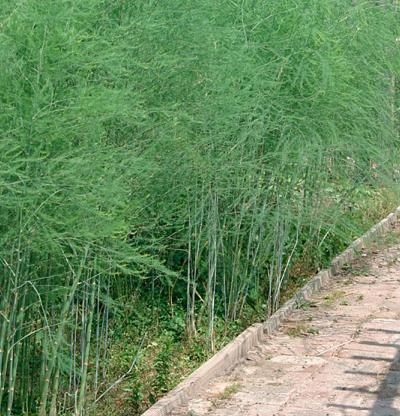
Asparagus (Asparagus officinalis) is a perennial vegetable whose edible shoots are harvested in spring. Male plants produce better yields (no flowers/fruit). Feathery, fernlike mature foliage makes a good backdrop for bedding plants. Female plants may self-seed abundantly. Choose a permanent location; plants dislike moving. Foliage useful in floral arrangements.
Sow seed at 61°F in autumn or early spring. Fusarium crown rot, Helminthosporium and Cercospora leaf spots common. Rust, anthracnose, canker, slugs, spider mites, aphids.
| Height | 1–3 ft. |
| Spread | 3–6 ft. |
| Growth Pace | Moderate |
| Light | Part Shade |
| Moisture | Medium |
| Maintenance | Moderate |
| Features | Showy foliage |
| Bloom Time | Summer |
| Flower Color | Green, White |
| Uses | Beds, Borders |
| Style | Cottage Garden, Kitchen Garden, Vegetable Garden |
| Type | Perennials |
Leaf Discoloration on Coco-Plum: Organic Recovery with Atomic Grow
Aspirin for Plants: Activating Natural Defense Pathways
Iron's Essential Role in Plant Growth: A Science Project Guide
Beetles, Grubs & Ants in Saudi Garden: Safe Control Options
Thick White Fungus Around Ferns and Roses: Nuisance or Threat?
Moraine Locust Leaves on Asparagus & Pruning Timing for Zone 5 Trees
Growing Wisteria from Seed: A Complete Guide to Bonsai, Blooms, and Finding Free Plants
Caring for Established Blue Euphorbia: Watering Timing Matters
Plants Around a Chlorinated Pool: Salt Is the Real Enemy
Killing Thorny Pasture Weeds Without Harming Cattle or Grass
Yucca Plant Lost Leaves: Likely Needs Replacement
Copyright © www.100flowers.win Botanic Garden All Rights Reserved