


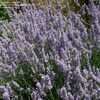
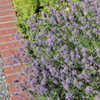
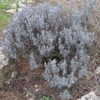
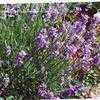
English lavender (Lavandula angustifolia), also called true lavender, is the most cold-hardy and widely cultivated lavender species. Its narrow, gray-green leaves and dense spikes of purple-blue flowers produce the quintessential lavender scent used in perfumes, sachets, oils, and culinary delights.
| Family: | Lamiaceae (lay-mee-AY-see-ee) |
| Genus: | Lavandula (lav-AN-dew-lah) |
| Species: | angustifolia (an-gus-tee-FOH-lee-uh) |
| Synonyms: | Lavandula delphinensis, Lavandula fragrans, Lavandula officinalis, Lavandula spica, Lavandula vulgaris |
Native to the Mediterranean, English lavender forms a compact shrub 1–3 feet tall and wide. It prefers alkaline, well-drained soil and full sun. The essential oil is high in linalool and linalyl acetate, giving a sweet, floral, herbaceous aroma.
Prune lightly after flowering; avoid cutting into old wood. Excellent drainage is critical—wet winters kill lavender. Space plants for air flow. Hardy in USDA zones 5–8.
Pineapple Sage (Salvia elegans): Fragrant Herb with Scarlet Flowers
Common Sage (Salvia officinalis): The Wise Herb for Kitchen and Medicine
Lavender 'Goodwin Creek Grey' (Lavandula 'Goodwin Creek Grey'): Hybrid with Silver Foliage
Purple Giant Hyssop (Agastache scrophulariifolia): Tall Native Pollinator Magnet for Moist Sites
Miltonia spectabilis: The Outstanding Brazilian Orchid with Butterfly-Like Flowers
Lavandula angustifolia 'Lavender Lady' – Silvery Foliage with Lavender-Blue Blooms
Lavandula angustifolia 'Lavender Munstead' – Classic English Lavender
Why English Lavender Died After Soil Amendment
Salvia mexicana: Mexican Sage with Blue Flowers and Green Calyces
Salvia staminea (Iranian Sage)
Carolina Geranium (Geranium carolinianum): Native Annual Cranesbill
Salvia mexicana: The Towering Mexican Sage
Lavandula 'Lavender Spanish Eyes': Blue Fragrant Flowers with Fernleaf Foliage
Copyright © www.100flowers.win Botanic Garden All Rights Reserved