


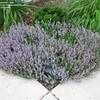
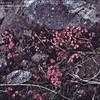
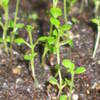
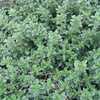
Thymus serpyllum, commonly called Wild Thyme or Mother of Thyme, is the quintessential creeping thyme. It forms a flat, dense mat of tiny, aromatic, gray-green leaves that release a wonderful herbal scent when crushed. In early to midsummer, it covers itself in masses of tiny, tubular, pinkish-purple flowers that are irresistible to bees and butterflies. This is the thyme traditionally used for thyme lawns and between pavers.
Wild Thyme demands full sun and sharp drainage; it thrives in poor, sandy, or rocky soil and is exceptionally drought-tolerant once established. It dislikes humidity and wet winters. Shear after flowering to keep it tight and prevent woody centers. Beyond its ornamental value, the leaves are edible and can be used fresh or dried in cooking. A timeless, multi-functional ground cover for sunny, well-drained sites.
| Family: | Lamiaceae (lay-mee-AY-see-ee) |
| Genus: | Thymus (TY-muss) |
| Species: | serpyllum (ser-PIE-lum) |
Canadian Wild Ginger (Asarum canadense): Native Woodland Ground Cover
Thymus citriodorus 'Variegata': Variegated Lemon Thyme – Citrus Scent and Gold-Splashed Leaves
Asarum caudatum: Wild Ginger – Heart-Shaped Leaves and Hidden Flowers
Phlox stolonifera 'Sherwood Purple': Creeping Phlox – Purple Carpet for Spring Shade
Gypsophila repens 'Rosea' (Creeping Baby's Breath)
Lemon Thyme (Thymus citriodorus): Citrus-Scented Culinary Thyme
Wild Coffee (Psychotria nervosa): Native Florida Shrub with Red Berries
Wild Bearded Iris (Iris germanica): The Ancestral Flag
Daylily 'Wild Mustang' (Hemerocallis 'Wild Mustang') – Cultivar Profile
Wild Proso Millet (Panicum miliaceum): Ancient Grain and Weedy Annual
Canada Wild Rye (Elymus canadensis): Graceful Native with Nodding Seed Heads
Blue Wild Rye (Elymus glaucus): A Native Western Grass with Blue-Green Foliage
Wild Black Cherry (Prunus serotina): A Native Timber Tree with Bitter Fruit
Copyright © www.100flowers.win Botanic Garden All Rights Reserved