


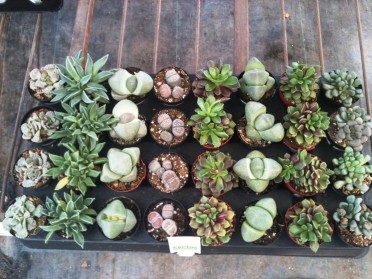
Nature's ultimate camouflage artists, Mimicry Plants (primarily Lithops—living stones, plus Conophytum, Faucaria, and others) have evolved to resemble the pebbles and rocks of their arid South African homes. Their fused, succulent leaf pairs form a cone or sphere with a translucent "window" on top for photosynthesis. They're a fascinating challenge for succulent enthusiasts who appreciate extreme adaptation.
The plant body consists of two thick, fused leaves with a fissure between them. The top surface is often patterned, colored, and textured to match surrounding stones—grays, browns, greens, rusts. A translucent window allows light into the buried photosynthetic tissue. Once a year, a new leaf pair forms inside the old, which then withers. Daisy-like flowers (white, yellow, orange) emerge from the fissure in autumn.
Grow in small, shallow pots with extremely gritty, fast-draining mix (mostly pumice/grit). Water only when the old leaves are fully withered and new growth is visible. Learn the specific cycle for your species. A fascinating but unforgiving group—rewarding for those who master the rhythm.
Mimicry Plants—living stones that disappear into the landscape, revealing their beauty only to the patient observer.
Nepenthes ventricosa Windowsill vs. Terrarium: Stability Is Key
Why Are My Nepenthes Pitchers Drying Out? Expert Advice for Healthy Pitcher Plants
Dewy Pine Flowering Care: No Special Watering Needed
Yucca Plant Decline: Why Fertilizer Spikes Make It Worse
Dragon Plant from Aldi: Brown Spots = Sunburn or Fungus
Monkey Tail Cactus (Rattail) Rescue: Light, Soil, and Cuttings
Saving a Wilting Jade Plant: Overwatering Rescue
Rubber Plant Rust Spots and Fungus Gnats: Connected Problems
Ponytail Palm (Beaucarnea) Brown Tips: Humidity, Not Drought
Philodendron Yellowing Leaves: Light, Water, and Acclimation Guide
Erigeron karvinskianus (Australian Fleabane) in Heat: Different Species, Same Rescue
ZZ Plant (Zamioculcas zamiifolia): The Nearly Indestructible Houseplant
Copyright © www.100flowers.win Botanic Garden All Rights Reserved