


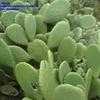
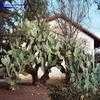
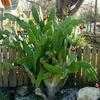
The Indian Fig, or Mission Cactus (Opuntia ficus-indica), is a large, shrubby to tree-like prickly pear cultivated for millennia for its edible pads (nopales) and sweet fruit (tunas). Spineless or sparsely spined cultivars are preferred for agriculture. It forms a woody trunk with age, reaching 10–15 feet. Large yellow to orange flowers appear in spring, followed by oval fruit ripening from green to deep red. Drought-tolerant and heat-loving, it's a staple in Mediterranean and arid landscapes worldwide.
Full sun.
Low. Monthly deep soak in summer; none in winter.
Well-drained, sandy or gravelly. Tolerates alkaline soil.
Pick young pads (nopales) in spring. Harvest fruit when fully colored.
| Family: | Cactaceae |
| Genus: | Opuntia (op-UN-shee-a) |
| Species: | ficus-indica (FY-kuss IN-dih-kuh) |
| Synonyms: | Cactus ficus-indica, Opuntia vulgaris, Opuntia maxima, Opuntia cordobensis, Opuntia tuna-blanca |
Prickly Pear in New Jersey: Native or Naturalized?
Santa Rita Prickly Pear (Opuntia santa-rita): Purple-Padded Desert Beauty
Brittle Prickly Pear (Opuntia fragilis): The Most Cold-Hardy Prickly Pear, Fragmenting Easily
Silver Dollar Prickly Pear (Opuntia robusta): A Massive, Blue-Green Padded Cactus for Large Spaces
Texas Prickly Pear (Opuntia engelmannii var. lindheimeri)
Violet Prickly Pear (Opuntia gosseliniana): A Purple-Padded Beauty
Prickly Pear Pad Propagation: Yellowing Top on Rooted Cutting
Weeding a Mature Prickly Pear Patch
Propagating Prickly Pear from Pads
Prickly Pear Growth Surge After Relocation: Light Response vs. Flowering
Forcing Prickly Pear to Flower: Patience Required
Are All Prickly Pear Cactus Fruits Edible? Most Are, But Handle Spines Carefully
Copyright © www.100flowers.win Botanic Garden All Rights Reserved