


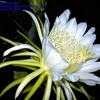
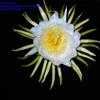
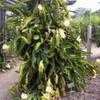
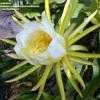
Dragon Fruit, or Pitaya (Hylocereus undatus), is a vining, epiphytic cactus famous for its spectacular nocturnal flowers and vibrant pink-skinned, white-fleshed fruit. The stems are three-ribbed, green, and can climb 20+ feet using aerial roots. Fragrant, dinner-plate-sized white blooms open at night, attracting bats and moths. The resulting fruit is sweet, refreshing, and rich in antioxidants. A fast grower, it's ideal for trellises, arbors, or hanging baskets in frost-free climates.
Full sun to partial shade. Afternoon shade in hottest regions.
Regular during growing season; keep soil moist but not soggy. Reduce in winter.
Rich, well-draining organic mix. Epiphytic nature appreciates orchid bark.
Provide sturdy trellis. Hand-pollinate at night for fruit set if pollinators scarce.
| Family: | Cactaceae |
| Genus: | Hylocereus (hy-loh-KER-ee-us) |
| Species: | undatus (un-DAY-tus) |
| Synonyms: | Cereus undatus, Hylocereus tricostatus, Cereus tricostatus |
Sourcing Night-Blooming Cereus in Canada
Red Dragon Flower (Huernia schneideriana): A Bizarre, Star-Shaped Bloomer for Succulent Collectors
Brazilian Prickly Pear (Brasiliopuntia brasiliensis): A Tree-Like Cactus with Flattened Branches
Cochineal Nopal Cactus (Nopalea cochenillifera): The Historic Dye Cactus
Costa Rican Night Blooming Cactus (Hylocereus costaricensis)
Green Dragon (Arisaema dracontium): Native Jack's Long-Tongued Cousin
Propagating Night-Blooming Cereus: How to Start New Plants from Cuttings
Night-Blooming Cereus: Treating Brownish-Black Leaf Spots
Growing Queen of the Night Cactus (Epiphyllum oxypetalum): Sun, Soil, and Bloom Watching
Identifying "Queen of the Night" Cacti: Which One Do You Have?
Queen of the Night (Night Blooming Cereus) Care: Small Pot, Sun, Dry, Bloom at Night
Overwintering a Large Night-Blooming Cereus Indoors
Copyright © www.100flowers.win Botanic Garden All Rights Reserved