


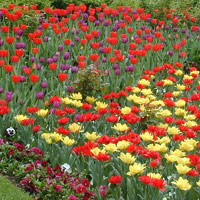
The jewels of the spring bulb garden, tulips come in a huge range of flower shapes, sizes, and colors.
From formal plantings to naturalized woodlands, there's a tulip for every setting. Best in cold winters, cool springs/summers. Species tulips reliably perennial; larger types may need replanting every few years. Colors: apricot, pink, salmon, red, deep maroon, white. Forms: double, ruffled, fringed, lily-shaped. Height 6 inches to 2 feet. Stagger bloom times for early to late spring. Some good for indoor forcing.
Full sun to light shade, well-drained soil. Shelter tall varieties from wind.
Fall, 6–8 weeks before hard frost, soil <60°F (Sept–Oct North, Oct–Nov South). Loosen soil 12–15 inches, add 2–4 inches compost. Hole ~3x bulb height. Set pointy end up, cover, firm. Space 4–6 inches. Water thoroughly. If voles/mice problematic, plant in buried wire cages.
Water during fall dry spells. After spring bloom, cut flower stalks, let leaves die back naturally (hide with other plants). Annual compost adequate. Large varieties may need replanting every few years; small types multiply and spread.
Whitefly Prevention in the Vegetable Garden: Early Soap Sprays Win
Testing Soil pH for Blueberries and Estimating Yield from a Small Planting
Forcing Tulips Indoors: Winter Blooms from Chilled Bulbs
Tulip Care Secrets: Plant, Protect, and Perennialize Your Bulbs
Tulip History and Care: From Ottoman Gardens to Modern Spring Blooms
Mothballs in the Garden: Not Labeled, Not Recommended
Choosing the Right Fertilizer: Time-Release vs. Water-Soluble for a Thriving Garden
Can You Plant a Vegetable Garden Over a Septic Leach Field?
Solving Wet Garden Areas: Drainage Solutions and Plant Choices
Tree Suggestions for a 15m Garden Divider: Rounded Canopy, ≤10m Height
Garden Cress: Growth Habits, Reproduction, and Culinary Uses
Old Tulip Bulbs in Raised Bed: Replace Rather Than Transplant
Copyright © www.100flowers.win Botanic Garden All Rights Reserved