


The indoor Cyclamen, often called the Florist's Cyclamen, is a truly special houseplant. Its flowers are not only striking, pretty, and colorful, but they possess a unique poise and elegance. 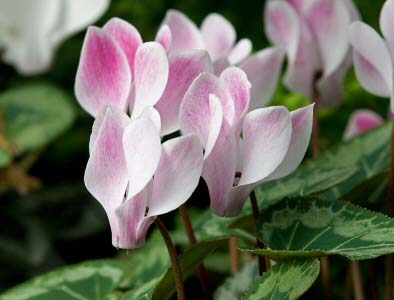 With upswept petals frozen as if caught mid-dance, the Cyclamen has a captivating charm—like the ballerina of the plant world. This allure is subtly enhanced by beautifully patterned foliage that provides months of visual interest.
Though technically a tuber (often mistaken for a bulb), Cyclamen naturally belongs outdoors. However, it adapts well as a temporary indoor plant, gracing homes and offices throughout autumn and winter. When temperatures rise in late spring, the plant retreats into its tuber and disappears completely. The good news? That dormant tuber is small, low-maintenance, and will burst back into bloom come early autumn with proper care—provided you keep it cool and well-watered. Heat and dryness are its enemies.
Prices are generally affordable, and nearly all commercially available plants are Cyclamen persicum. Yet variety abounds: flowers range from white and pink to deep red and violet, with single or double forms. Plants come in three size classes—Standards (up to 30 cm), Intermediates (20 cm), and Miniatures (15 cm)—and foliage patterns vary widely. After flowering, you can plant the tuber outdoors or store it for next winter.
Bright, indirect light is essential for a long-lasting floral display. Too little light yields sporadic blooms; too much direct sun fades flowers and leaves.
Keep soil consistently moist during active growth—but never soggy. Overwatering risks tuber rot. Allow the top layer to dry slightly between waterings, but never let it dry out completely while the plant is growing.
A Cyclamen is not suited for a warm living room atop a TV with a fire roaring nearby.
Cyclamen dislikes dry air, largely because it often accompanies warmth. Centrally heated rooms, fireplaces, and hot electronics create problematic conditions. Increase humidity with pebble trays or by grouping plants.
Feed only when the plant is actively growing. Apply a standard houseplant fertilizer every two to three weeks just before and during flowering to encourage more blooms. Never fertilize a dormant tuber.
Most Cyclamen sold are not frost-hardy, but they tolerate cool conditions better than many houseplants—making a porch suitable. Indoors, the real danger is heat. Excessive heat causes rapid decline, poor appearance, and a flowering season cut from months to weeks. Ideal temperature: 16 °C / 60 °F or slightly cooler.
Repot in August using standard potting mix, just before new leaves emerge. If sprouting has just begun, you can still repot; if leaves or flowers are fully formed, wait until next year.
Dividing the tuber is risky and best left to experts—cut surfaces rot easily. Growing from seed is possible but fussy, requiring outdoor-like temperature fluctuations. Buying new plants is usually more practical.
Growth can be explosive. Energy stored in the tuber fuels rapid development until the plant reaches its mature size (determined by its size class), then shifts focus to flowering.
Three size groups: Standards (up to 30 cm / 1 ft), Intermediates (20 cm / 8 in), and Miniatures (15 cm / 6 in).
The flowers are the main attraction—elegant, diverse in color (whites, pinks, reds, violets) and form (singles, doubles). 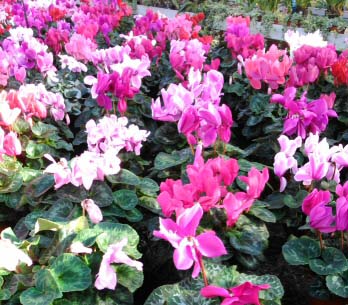 The foliage resembles miniature lily pads, but cannot compete with the floral display. Bloom duration: a couple of months in cool conditions; half that in warmth.
When the plant goes dormant in spring, store the tuber in a shady, fairly dry spot—pot and all, or bare. From August onward, water lightly, increase light (e.g., move to a windowsill), and repot if bare, positioning the tuber so its top sits just above soil. Keep barely moist until sprouts appear, then water more heavily as growth accelerates.
Cyclamen Aphids: Atomic Grow Foliar Wash and Systemic Healing
New Sod Failing Over Compacted Soil: Fix the Prep, Not Just the Grass
One Flower Bed Keeps Killing Annuals: Diagnose Drainage and Fungal Issues
Dealing with Ryegrass in a Bermuda Lawn: Shade Challenges and Removal
Bougainvillea Bloom Troubleshooting in Tampa Bay
Kordana Miniature Rose Care: Sun, Soil, Fertilizer, and Disease Resistance
Pinguicula ‘Aphrodite’ Color Change and Poi Dog Nepenthes Temperature Tolerance
Damaged Sarracenia Hood: Cut or Keep?
Fungus Gnats in Outdoor Bog Garden: Unusual—Check Setup
Identifying a Mystery Sarracenia from Lowe's: Hybrid or Species?
Black Spot on Nepenthes New Shoot: Cosmetic Damage, Not a Health Crisis
Identifying a "Death Cube" Sundew: Likely Drosera spatulata Fraser Island Form
Growing Sarracenia 'Judith Hindle' in a Shady Yard: Artificial Light Solutions
Diagnosing Abnormal Pitcher Growth in Nepenthes hamata: Likely Thrips Infestation
Copyright © www.100flowers.win Botanic Garden All Rights Reserved